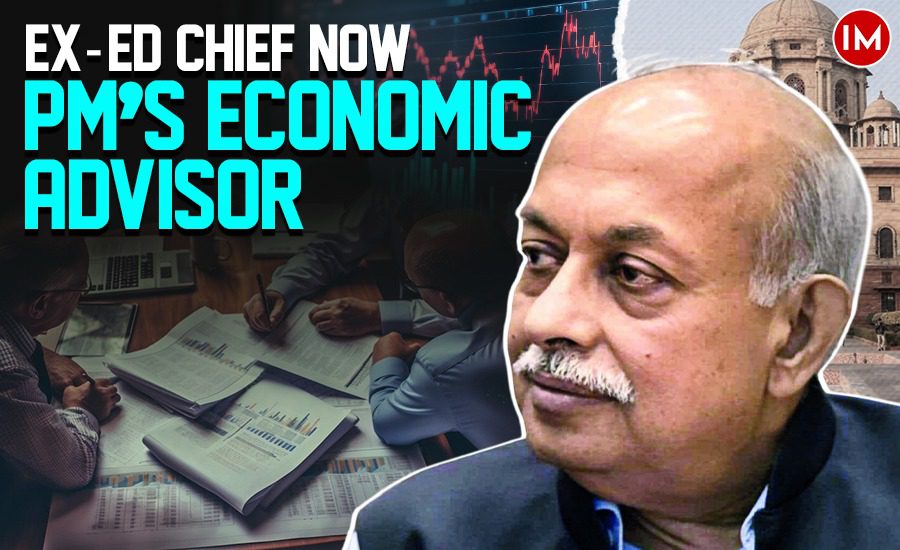
For five years, Sanjay Kumar Mishra helmed the Enforcement Directorate (ED), a tenure extended thrice, ultimately ending on September 15th, 2023, following a Supreme Court order. This extended period marked a pivotal phase in the ED’s history, one indelibly linked to Mishra’s resolute and often controversial leadership. His tenure is remarkable not just for its length, but for the significant impact he left on the organization and its investigations.
Mishra’s time as ED chief witnessed a stunning Rs 65,000 crore recovery of assets. This monumental figure represents a staggering portion – a remarkable 65% – of all attachments executed by the ED in the past 17 years. Such substantial achievements paint him as a formidable figure who strengthened the agency’s hand in combating financial crimes across the country. His influence extended beyond simple numerical impact.
Mishra spearheaded more than 4000 cases and was involved with around 3000 searches – showcasing his drive for action and accountability across numerous high-profile targets. He was known for his drive and the incredible dedication towards ensuring that the ED maintained strong internal integrity and professional diligence.
This unwavering focus, however, was not without its detractors. Mishra’s long tenure, secured through repeated extensions, and his agency’s focus on high-profile investigations involving prominent opposition figures sparked significant criticism, with allegations of partisan actions levelled frequently. These criticisms portrayed a narrative of political targeting, casting a shadow on his achievements, and overshadowing what could easily have been a celebrated career based on the accomplishments alone.
But Mishra remained largely silent amidst this swirling storm of controversy. His approach focused on delivering results rather than engaging in public relations battles. This self-imposed reticence underscored a focus on demonstrating effective crime solving capabilities and actions over media exposure or reputation building.
His colleagues defend his integrity and work ethic. Their narratives paint a picture of an officer guided strictly by rules and processes. They claim Mishra was more of a hands-on professional and tactician within the ED, actively involving himself in most of the significant ongoing operations and investigative initiatives of the organisation.Mishra is demanding, not just mentally, physically too. He runs 10 km every day and is a believer in intermittent fasting.
He secured a master’s degree in biochemistry from Lucknow University and authored several papers on immunology.He began his professional career as a research fellow at the Central Drug Research Institute (CDRI). But, swayed by family encouragement, he ultimately set aside the science to enter the Indian Revenue Service (IRS) through his first attempt at the highly-competitive civil services examination. The rigorous standards associated with securing a spot within the prestigious service would later serve as testament to his character and professional ability.
It was on his family’s persuasion that Mishra appeared for the civil services exams, clearing it in his first attempt. After joining the Indian Revenue Service (IRS) in 1984, his first posting was in Gorakhpur, UP, as assistant director in the Income Tax department. Within four years of joining IRS, he had a stint with the ED as an Assistant Director in Agra and Jaipur. Those were the days when the ED only probed cases of foreign exchange violations under the now repealed Foreign Exchange Regulation Act FERA.
In 1994, Mishra returned to his cadre of Income Tax and was posted in Ahmedabad for a nine-year stint. That is when he is supposedly came in contact with the then Chief Minister Narendra Modi. Mishra then moved to Kolhapur in Maharashtra and was back in Delhi in 2006, where he handled international taxation and transfer pricing.
Throughout his work with the ED in the intervening years, Mishra showed remarkable acumen.A key role included gathering information related to leaked accounts from France’s HSBC documents, involving leading members of India’s business circles. Following various posts involving handling transfer pricing and financial accounting,
When the NDA came to power in 2014, Mishra, then a year into his tenure as a joint secretary in the all-important Ministry of Home Affairs, was among the 50-odd senior bureaucrats who were transferred out from key ministries in the first few months of the Modi government. Back in the Income Tax, he built two cases that caught the attention of the government — one against media house NDTV and the other against Young India, a Gandhi family-run organisation that owns the National Herald newspaper. Both cases were till then about tax assessment, Mishra turned them into prosecutable offences.
By November 2018, Mishra was appointed the new chief of ED. Under Mishra, the agency registered cases against opposition politicians, including Congress leaders Sonia and Rahul Gandhi, P Chidambaram, D K Shivakumar and Ahmed Patel, NCP leaders Sharad Pawar and Anil Deshmukh, and AAP leaders Satyender Jain and Manish Sisodia,Jharkhand CM Hemant Soren, and media organisations like The Print and NDTV. ED also filed cases against activists Harsh Mander, journalists Siddique Kappan and media houses such as NewsClick.
In was thus in fitness of things for the Centre to go great lengths to retain him beyond his two-year tenure. When the first extension granted to him was challenged in the Supreme Court, the government brought an Ordinance and later pushed through a Bill in Parliament to give the directors of ED and CBI conditional five-year tenures.
Under his leadership ED moved for the extradition of fugitives like Vijay Mallya and Nirav Modi, strengthening India’s stance against economic offenders. The expansion of the ED, with increased staffing and new offices, enhanced its capacity to enforce the Prevention of Money Laundering Act (PMLA) and Foreign Exchange Management Act (FEMA).
Lets hope he infuses same vigour in PM’s Economic Advisory Council which might prove crucial at a time when the country is facing challenge of Trump-imposed Tariff regime, a global economic slowdown and domestic economy facing troubles from freebies-led government schemes.