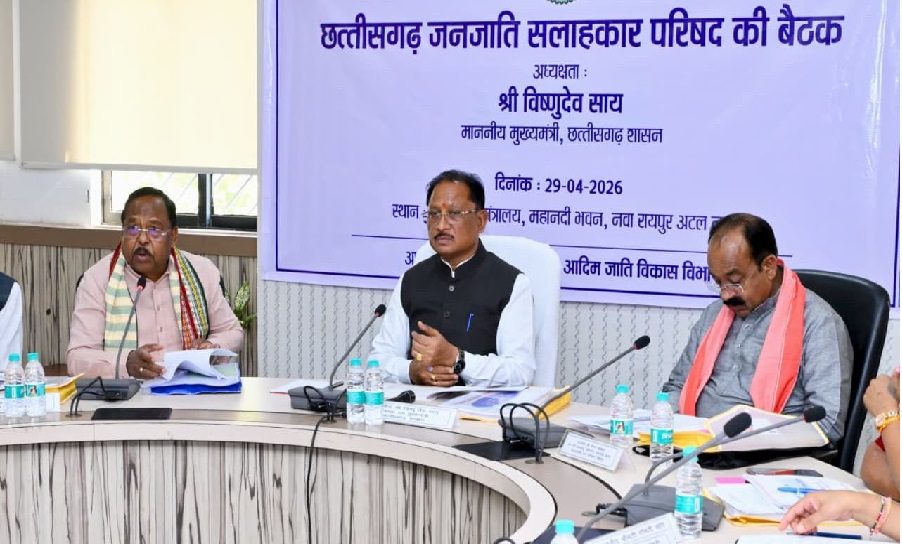
Raipur: Chhattisgarh Chief Minister Vishnu Deo Sai chaired an important meeting of the Chhattisgarh Tribal Advisory Council at Mahanadi Bhawan, Secretariat, where several key decisions were taken focusing on tribal development, infrastructure, education, healthcare, and cultural preservation.
The meeting placed special emphasis on accelerating development in Bastar and other tribal-dominated regions, with renewed focus on welfare schemes and basic amenities.
Bastar Development Focus: Rapid Expansion of Basic Infrastructure
CM Sai highlighted that the Bastar region, larger in area than Kerala, remained underdeveloped for a long time. He said that the government is now ensuring fast-paced implementation of development projects.
Key infrastructure improvements include:
- Expansion of roads, electricity, and water supply
- Improved ration distribution systems
- Faster implementation of government schemes in remote areas
He noted that with improving security conditions, development work is now reaching even the most remote villages.
Launch of Niyad Nella Nar 2.0 for Remote Area Development
The Chief Minister announced that the Niyad Nella Nar Yojana 2.0 will be launched soon.
The upgraded version of the scheme will further expand:
- Electricity access in remote villages
- Drinking water supply
- Road connectivity
- Food and ration distribution systems
The initiative aims to ensure that basic services reach every household in tribal and forest regions.
Tribal Culture Protection: Safeguarding Sacred Sites
CM Sai emphasized the importance of preserving tribal heritage and instructed officials to protect cultural and religious sites such as:
- Devgudi
- Sarna sacred groves
He also directed strict action against illegal encroachments on these sites, calling cultural preservation a top government priority.
Strengthening Education and Healthcare in 6600 Villages
Under the Dharti Aaba Gram Utkarsh Yojana, the state is strengthening education and healthcare infrastructure in around 6,600 villages.
Key measures include:
- Improved schooling facilities
- Strengthened rural healthcare systems
- Expansion of student hostels and residential education support
Additionally, under PM Janman Yojana, 32,000 houses have been sanctioned for tribal families.
Health Mission and Education Reforms in Tribal Areas
The Mukhyamantri Swasth Bastar Yojana continues to conduct health screenings for nearly 36 lakh people across the region.
Education reforms also include:
- Increased hostel capacity
- Better teacher availability
- Improved infrastructure maintenance
- Early education access in newly secured areas
The Chief Minister stressed that classroom education must be conducted in proper facilities, not in open spaces.
Review of Tribal Land and Infrastructure Projects
The government has ordered a detailed review of:
- Long-term lease misuse of tribal land
- Land-related irregularities
Proposals to include Korwa and Sansari Uraon communities in the Scheduled Tribe list will be sent to the central government.
CM Sai also expressed concern over delays in the Ambikapur National Highway project, directing officials to ensure timely and quality completion.
Leaders Emphasize End of Naxal Impact on Development
Tribal Development Minister Ramvichar Netam stated that declining Naxal influence has significantly improved development delivery in Bastar and Surguja regions.
He said inter-department coordination has been strengthened to ensure timely execution of welfare schemes and better service delivery to tribal communities.
High-Level Attendance at Council Meeting
The meeting was attended by several senior leaders and officials, including:
- Deputy Chief Minister Arun Sao
- Forest Minister Kedar Kashyap
- Senior bureaucrats and police officials including the Chief Secretary and DGP
Strong Push for Inclusive Tribal Development
The council meeting concluded with a strong commitment to ensuring inclusive development, cultural protection, and infrastructure expansion across tribal regions of Chhattisgarh. The government reiterated its focus on bringing remote communities into the mainstream development framework.