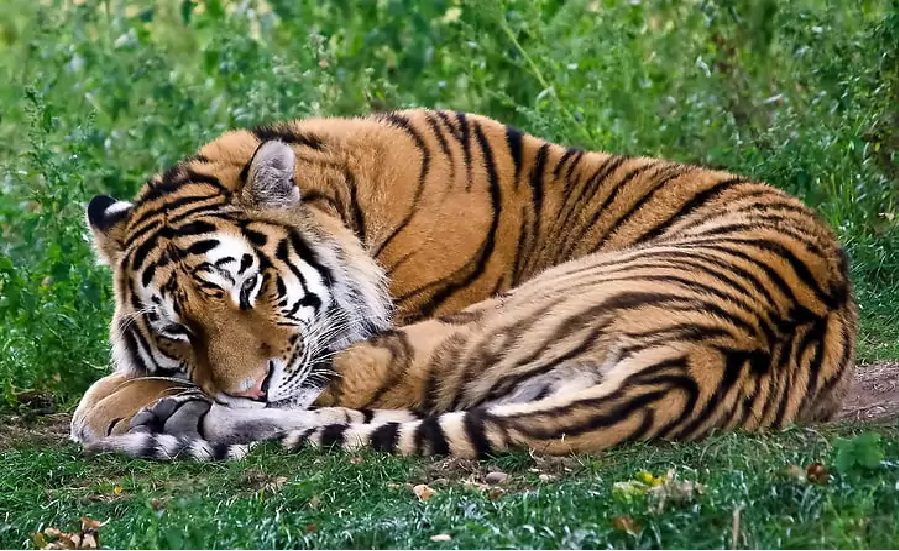
New Delhi: Why do tigers sleep for most of the day? According to Himanshu Tyagi, the answer lies in one simple principle: energy conservation.
The IIT Roorkee gold medalist and Indian Forest Service (IFoS) officer recently shared a fascinating explanation on his official X handle, revealing that tigers are among nature’s most efficient energy managers. His post has drawn widespread attention for breaking down the science behind the majestic predator’s prolonged resting habits.
Tigers understand calorie math better than most of us do.
— Himanshu Tyagi, IFS (@Himanshutyg_ifs) May 7, 2026
They rest and sleep for 16–20 hours a day, not out of laziness, but out of pure energy conservation. Their sleep is polyphasic: deep sleep interspersed with periods of light dozing, ensuring maximum recovery between… pic.twitter.com/YkNcP90cxE
“Tigers Understand Calorie Math Better Than Most of Us”
In his viral social media post, Himanshu Tyagi wrote: “Tigers understand calorie math better than most of us do.”
He explained that tigers sleep and rest for 16 to 20 hours every day, not because they are lazy, but because conserving energy is critical to their survival.
According to him, every movement and every calorie matters in the life of a tiger.
Polyphasic Sleep Helps Tigers Recover Between Hunts
Tyagi noted that tigers follow a polyphasic sleep pattern, which consists of deep sleep interspersed with periods of light dozing.
This sleep cycle allows the big cats to:
- Maximize recovery
- Remain alert to threats and opportunities
- Prepare for the next hunt
- Optimize energy expenditure
The resting pattern is a finely tuned biological adaptation that supports their high-energy hunting strategy.
One Successful Hunt Can Feed a Tiger for Up to Seven Days
Hunting requires an intense burst of anaerobic energy. Tigers rely on stealth, strength and explosive power to stalk and overpower large prey such as deer and wild boar.
Tyagi explained that although the energy investment is enormous, the payoff is equally substantial.
A single successful kill of a large ungulate can sustain a tiger for up to seven days, making energy conservation between hunts essential.
Calm and Conflict-Averse Outside Hunting
Despite their fearsome reputation, tigers are generally calm and avoid unnecessary confrontations.
According to Tyagi, these apex predators engage in conflict only when necessary. By minimizing unnecessary movement and aggression, they preserve precious energy for survival-critical tasks such as hunting and territorial defense.
Nature’s Most Efficient Energy Managers
Summing up the tiger’s lifestyle, Himanshu Tyagi wrote: “Every movement, every calorie, is accounted for. They are one of nature’s most efficient energy managers.”
His explanation highlights how the tiger’s resting habits are an evolutionary strategy rather than a sign of inactivity.
Who Is Himanshu Tyagi?
Himanshu Tyagi is a 2020-batch Indian Forest Service officer currently serving in the Madhya Pradesh cadre.
He is widely known among UPSC aspirants and wildlife enthusiasts for his educational achievements and active presence on social media.
Educational Background
- Chemical Engineering graduate from Indian Institute of Technology Roorkee
- Gold medalist at IIT Roorkee
- Worked for nearly six years at Indian Oil Corporation Limited before joining civil services
UPSC Achievements
- Secured All India Rank 25 in the UPSC Indian Forest Service Examination 2020
- Later secured AIR 333 in the UPSC Civil Services Examination 2022
Mentorship and Public Outreach
Tyagi frequently shares preparation strategies, productivity insights and wildlife observations through social media, where he has built a strong following among civil services aspirants.
Why Tigers Sleep So Much: Key Takeaways
- Tigers rest for 16–20 hours daily
- Their sleep is polyphasic, combining deep sleep and light dozing
- Hunting demands intense anaerobic energy
- One successful hunt can feed them for up to seven days
- They avoid unnecessary movement and conflict
- Their lifestyle reflects highly efficient energy management