New Delhi: In a significant strategic shift aligned with India’s push for defence self-reliance, the Indian Army has halted discussions on acquiring American-made Stryker armoured vehicles, citing operational limitations and lack of suitability for Indian conditions.
Defence sources confirmed that the procurement initiative has been entirely shelved, with military planners now pivoting decisively towards indigenous alternatives to meet the requirements of future wheeled Infantry Combat Vehicle (ICV) fleets.
Operational Requirements Drive Decision
A key factor behind the decision is the Army’s requirement for amphibious capabilities in wheeled ICVs. The forces mandate that such vehicles must independently navigate water bodies like rivers and canals without relying on external combat engineering support.
The Stryker platform failed to meet these benchmarks, lacking built-in amphibious functionality essential for India’s diverse and riverine terrain.
Read also: Indian Army Clears MPATGM Deal: Indigenous Missile System to Enhance Combat Readiness
Indigenous WhAP Emerges as Preferred Choice
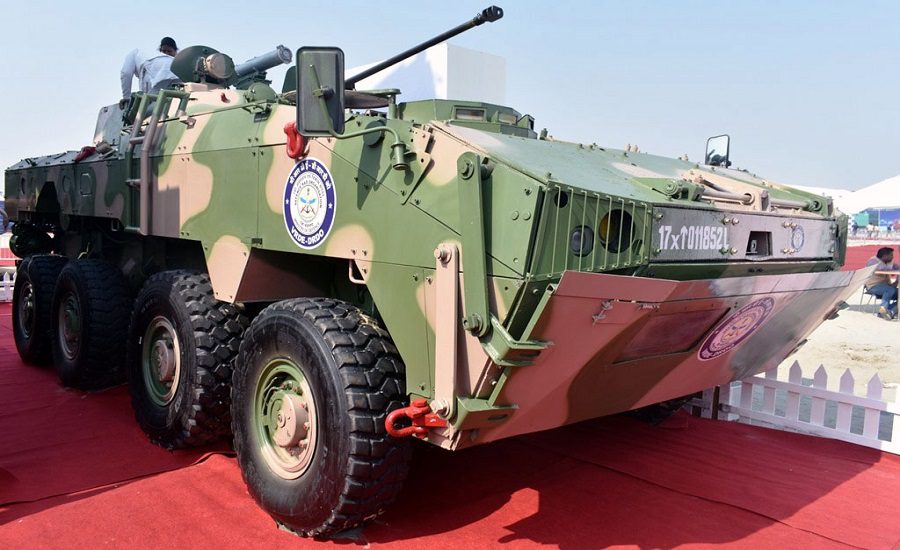
In contrast, the indigenously developed Wheeled Armoured Platform (WhAP), co-developed by Tata Advanced Systems and the Defence Research and Development Organisation (DRDO), has emerged as a strong contender.
The WhAP is equipped with rear-mounted hydro-jets, enabling it to traverse water bodies at speeds of up to 10 km/h. This capability provides enhanced operational flexibility and tactical superiority in varied combat environments.
High-Altitude Performance a Major Concern
The Stryker’s limitations became more pronounced during performance evaluations in high-altitude areas such as Eastern Ladakh. The region’s steep terrain and low-oxygen environment exposed mobility challenges in the platform.
Powered by a 350-horsepower Caterpillar engine, the Stryker reportedly struggled to deliver the agility required for Himalayan conditions. The Indian Army places significant emphasis on a strong power-to-weight ratio for such environments, a principle also reflected in other projects like the Zorawar light tank.
WhAP Outperforms with Superior Engine Power
The WhAP addresses these challenges effectively with its 600-horsepower Cummins ISX diesel engine, offering significantly better performance in high-altitude and rugged terrains.
Its superior mobility, combined with amphibious capability, positions it as a more suitable option for India’s operational needs.
Strategic Shift Backed by Army Leadership
The shift away from the Stryker platform had been hinted at earlier by Chief of Army Staff General Upendra Dwivedi, who had indicated a clear preference for indigenous solutions while discussing future infantry mobility plans.
The Stryker was reduced to an optional consideration, reflecting the Army’s growing confidence in domestic defence manufacturing.
Indigenous Platforms Take Centre Stage
With the cancellation of the Stryker deal, indigenous platforms such as the WhAP and the Infantry Protected Mobility Vehicle (IPMV) are now at the forefront of procurement strategies.
These systems have already demonstrated their effectiveness in field conditions and are better aligned with the Army’s operational requirements.
Boost to Atmanirbhar Bharat in Defence
The decision underscores India’s commitment to the Atmanirbhar Bharat initiative, which aims to reduce dependence on foreign defence imports and strengthen domestic manufacturing capabilities.
The WhAP stands out as a success story of this initiative, featuring:
- Modular design architecture
- Blast-resistant V-shaped hull
- Multiple configurations, including command posts and combat variants
Notably, the platform has already been inducted into Indian security forces and has achieved export success, including to countries like Morocco.
Self-Reliance
By shelving the Stryker acquisition, the Indian Army has reinforced its strategic focus on indigenous innovation and operational suitability. The move not only enhances combat readiness tailored to Indian conditions but also marks a decisive step towards self-reliance in defence production.
Read also: Indian Army Commanders’ Conference 2026: Key Highlights, Security Review, Strategic Decisions