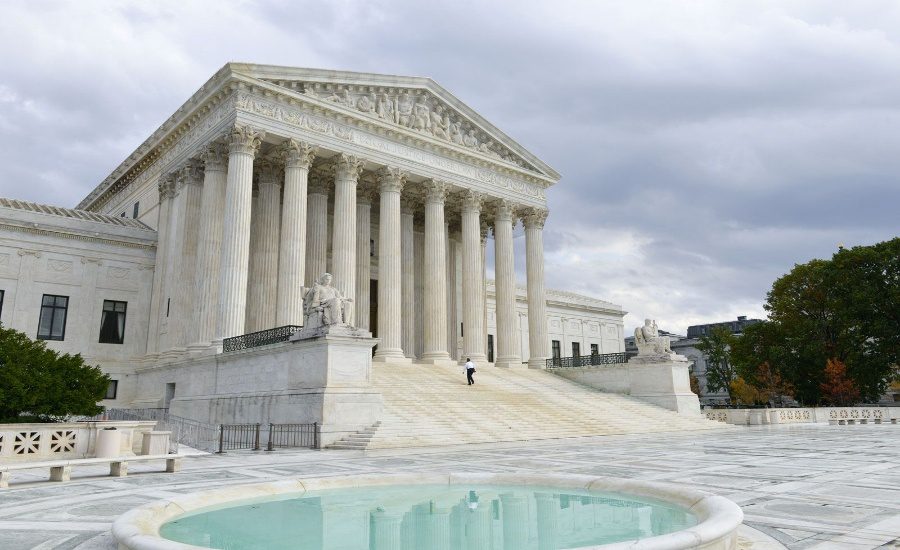
United States: The US Supreme Court birthright citizenship ruling has brought major relief to thousands of Indian families living in the United States. In a landmark 6-3 judgment, the court struck down President Donald Trump’s executive order that sought to end automatic citizenship for many children born on US soil. The decision reaffirms the protection provided by the US Constitution’s 14th Amendment and is expected to benefit Indians on H-1B, L-1, F-1 and other temporary visas.
Details of US Supreme Court Birthright Citizenship Ruling
The US Supreme Court ruled by a 6-3 majority that children born in the United States are citizens at birth under the Citizenship Clause of the 14th Amendment. The court found that President Trump’s executive order restricting birthright citizenship was unconstitutional.
Chief Justice John Roberts, writing for the majority, said the Constitution clearly protects citizenship for nearly everyone born on US soil, with only a few long-recognized exceptions such as children of foreign diplomats.
Why Was Trump’s Executive Order Challenged
Soon after beginning his second term, President Donald Trump signed an executive order aimed at ending automatic US citizenship for children born to:
- Parents staying illegally in the US.
- Parents living temporarily in the US on visas such as work or student visas.
Several states, immigrant rights groups and affected families challenged the order in court, arguing that it violated the US Constitution. The Supreme Court ultimately agreed with that argument.
US Supreme Court Birthright Citizenship Ruling: What Does the 14th Amendment Say
The 14th Amendment, adopted in 1868, states that all persons born or naturalized in the United States and subject to its jurisdiction are US citizens.
The Supreme Court reaffirmed that this constitutional protection cannot be removed through a presidential executive order. Any major change would require constitutional or congressional action, which is legally and politically much more difficult.
US Supreme Court Birthright Citizenship Ruling: Why Is This Good News for Indians
The decision is especially important for the large Indian community living in the United States. Many Indians work there on H-1B, L-1, or other employment visas, while thousands of students stay on F-1 visas before moving to work visas.
If these families have children born in the US, those children will continue to receive automatic US citizenship, despite their parents holding temporary visas.
Relief for Green Card Waiting Families
Thousands of Indian professionals spend many years waiting for US permanent residency because of long employment-based green card backlogs. During this waiting period, many children are born in the United States. The Supreme Court’s decision ensures these children remain US citizens by birth, providing legal certainty for families facing lengthy immigration delays.
What is the Impact of US Supreme Court Birthright Citizenship Ruling
Indian students studying in the US on F-1 visas also benefit from the ruling. Students who later start families while legally staying in the US can continue to rely on existing constitutional protections regarding birthright citizenship.
This removes uncertainty that had worried many temporary visa holders since the executive order was announced.
Read also: India Doesn’t Owe Trump a ‘Thank You’: Ex-IAS Sanjay Dixit Rejects Mediation Gratitude