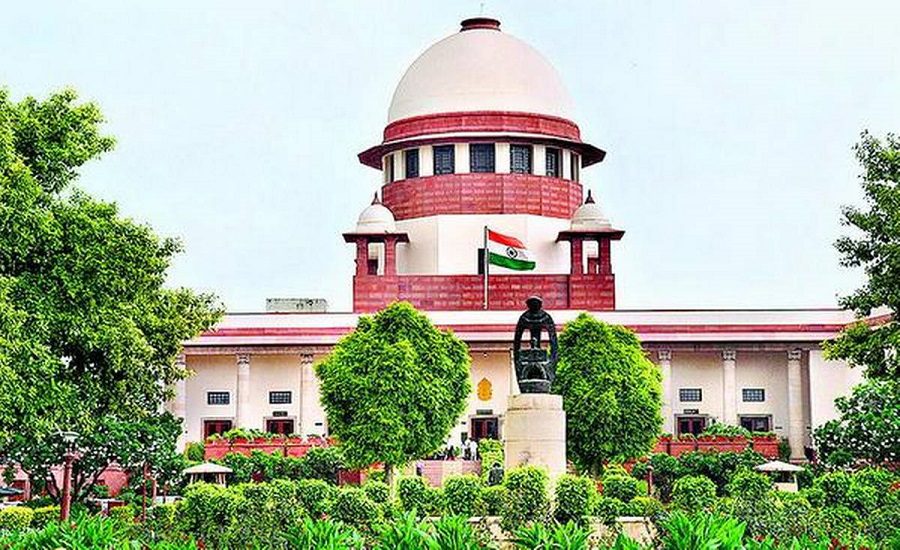
New Delhi: In a significant development in India’s legal education and judicial recruitment landscape, the Supreme Court of India has reopened deliberations on the controversial three-year legal practice requirement for entry into judicial services — particularly its impact on persons with disabilities (PwDs).
The apex court has issued directives to all High Courts, National Law Universities (NLUs) and law schools seeking their feedback and recommendations, signalling a consultative nationwide process.
Background of the Disabled Legal Aspirants Practice Ruling
In May 2025, the Supreme Court reinstated a mandatory minimum of three years of practice as an advocate before a law graduate can be eligible for the entry-level judicial services examination (Civil Judge – Junior Division).
This ruling overturned earlier relaxations that allowed fresh law graduates to directly contest judicial recruitment exams.
The judgment sought to ensure that candidates gain sufficient courtroom exposure, professional maturity, and decision-making capabilities before assuming judicial responsibilities — qualities that the court found lacking in recruits without prior practice.
The PwD Challenge: Inclusive or Exclusionary?
The new process stems from a petition filed by the Bhumika Trust, which contends that the three-year practice rule disadvantages law graduates with disabilities.
According to the petition, disabled candidates face systemic barriers in securing work with senior lawyers or chambers, making it significantly harder for them to accumulate the requisite three years of legal practice.
Representatives argued that while the intent of the rule is to enhance judicial competence, its practical implications may inadvertently marginalize PwDs, who are disproportionately denied opportunities to build legal experience.
Disabled Legal Aspirants Practice Ruling: Supreme Court’s Response
A Supreme Court bench comprising Chief Justice Surya Kant, Justice Joymalya Bagchi, and Justice Vijay Bishnoi acknowledged the concerns raised but expressed reservations about granting category-based exemptions.
The court emphasized that any adjustment to the eligibility rule should be uniformly applicable to all law graduates, irrespective of disability status, to preserve fairness and consistency in judicial recruitment.
The bench underscored that selective exemptions — even with benevolent intent — might create psychological impressions of inferiority among beneficiaries once they assume judicial roles.
Nationwide Feedback: High Courts and NLUs Engaged
In its latest order, the Supreme Court directed:
- All High Courts to place the matter before their respective Chief Justices.
- NLUs and law schools to submit their suggestions and viewpoints on the three-year practice norm within four weeks.
The court reasoned that an inclusive consultative process will yield a more holistic perspective, rather than relying solely on anecdotal arguments.
Student Sentiment: Morale and Demoralization
The bench also observed that many young law students express disappointment and demoralization over the ruling, further highlighting the need for deliberative input from law schools and student communities.
Disabled Legal Aspirants Practice Ruling: Key Issues for Consideration
1. Practical Exposure vs. Equal Opportunity
Proponents argue that courtroom experience enhances judgment capacity, professional demeanor, and real-world legal training — essential traits for judicial officers.
Critics contend that the rule inadvertently maintains barriers for historically marginalized groups, including persons with disabilities, who are less likely to secure sustained practice opportunities.
Next Steps and Anticipated Timeline
All High Courts and law schools must submit comprehensive recommendations within four weeks from the date of the order. After receiving this input, the Supreme Court is expected to consider whether to uphold the strict three-year practice rule, introduce uniform adjustments, or craft new eligibility parameters applicable to all law graduates, including those with disabilities.
Read also: Explained: Supreme Court’s New SOP on Oral Arguments and How It Aims to Deliver Faster Justice