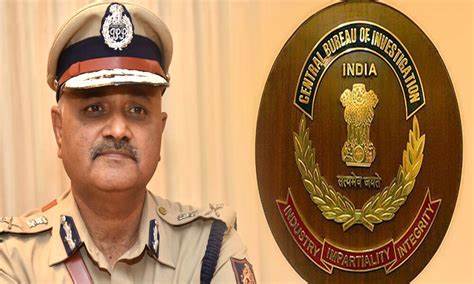
New Delhi: The Central Government has approved a one-year extension in the tenure of Praveen Sood as Director of the Central Bureau of Investigation (CBI), allowing him to continue in office until May 24, 2027.
The decision was formalised through an order issued by the Department of Personnel and Training (DoPT) following the recommendation of the high-powered selection committee headed by Narendra Modi.
Mr Sood, a distinguished 1986-batch Indian Police Service (IPS) officer of the Karnataka cadre, was first appointed as CBI Director in May 2023 and assumed charge on May 25, 2023, succeeding Subodh Kumar Jaiswal. After completing his initial two-year term, he was granted a one-year extension in May 2025 and has now received a second extension.
Rahul Gandhi Registers Strong Dissent Against Extension Process
The decision came amid strong objections from Rahul Gandhi, who submitted a formal dissent note during the selection committee meeting.
Mr Gandhi alleged that the process had been reduced to a “mere formality” and claimed he was denied access to essential documents, including self-appraisals and 360-degree evaluation reports of eligible candidates.
In his dissent note, Mr Gandhi stated that he could not abdicate his constitutional responsibility by participating in what he described as a biased exercise. He further accused the government of using the CBI to target opposition leaders, journalists and critics.
How the CBI Director Is Selected
The appointment of the CBI Director is made by the Central Government based on the recommendation of a three-member committee comprising:
- Prime Minister of India (Chairperson)
- Leader of Opposition in the Lok Sabha
- Chief Justice of India, or a Supreme Court judge nominated by the CJI
This statutory mechanism is designed to ensure transparency and bipartisan consultation in the selection of the head of India’s premier investigative agency.
Second Extension After No Consensus on Successor
IPS Sood’s original two-year tenure was scheduled to end on May 24, 2025. However, in May 2025, the government granted him a one-year extension after the committee failed to reach a consensus on his successor.
With the latest decision, Sood will remain at the helm of the CBI until May 24, 2027, making this his second consecutive extension.
Who Is Praveen Sood?
Mr Sood is widely regarded as one of India’s most accomplished police officers, known for his technology-driven policing, administrative reforms and strong focus on cybercrime prevention.
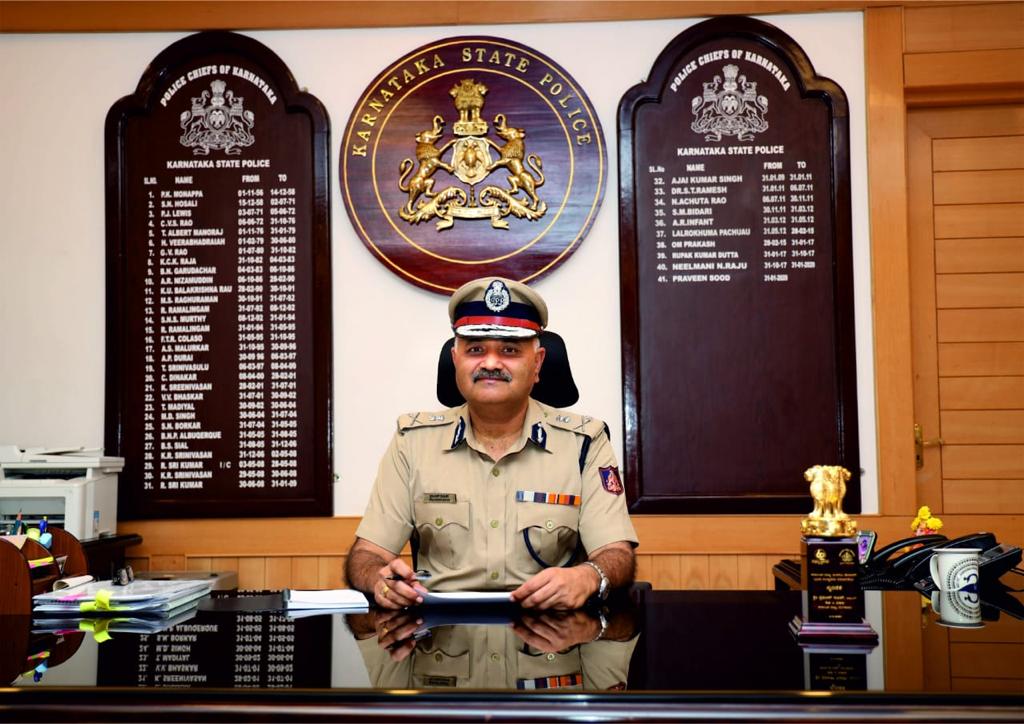
Before taking charge as CBI Director, he served as Director General and Inspector General of Police (DGP) of Karnataka and held several key policing and administrative positions over nearly four decades.
He is also known in public life as the father-in-law of Mayank Agarwal, Indian crickter.
Early Life and Education
- Born in 1964 in Kangra district, Himachal Pradesh
- Graduated in Civil Engineering from Indian Institute of Technology Delhi
- Joined the IPS in 1986 at the age of 22
Completed postgraduate studies in Public Policy and Management from Indian Institute of Management Bangalore and the Maxwell School of Citizenship and Public Affairs in 2003
Distinguished Police Career
Early Assignments
Mr Sood began his policing career in 1989 as Assistant Superintendent of Police (ASP), Mysore. He later served as Superintendent of Police in Bellary and Raichur, and as Deputy Commissioner of Police (Law and Order) in Bengaluru.
International Deputation
In 1999, he went on a three-year foreign deputation as Police Advisor to the Government of Mauritius, where he gained exposure to policing systems in Europe and the United States.
Commissioner of Mysore (2004–2007)
As Police Commissioner of Mysore, he transformed the city’s traffic management system through engineering improvements, awareness campaigns and strict enforcement. During this period, he also oversaw the arrest of Pakistan-origin terrorists.
Bengaluru Traffic Reforms
As Additional Commissioner of Police (Traffic), Bengaluru from 2008 to 2011, he established one of India’s most advanced Traffic Management Centres and promoted technology-based traffic enforcement.
Karnataka State Police Housing Corporation
In 2013–14, as Managing Director of the Karnataka State Police Housing Corporation, he increased the corporation’s turnover from ₹160 crore to ₹282 crore within nine months.
Technology and E-Governance Initiatives
As head of the Computer Wing, he led implementation of the Crime and Criminal Tracking Network and Systems (CCTNS) across Karnataka, enabling real-time digital access to police data statewide.
He also introduced mobile governance and citizen service delivery mechanisms under the Karnataka Guarantee of Services to Citizens Act.
Bengaluru Police Commissioner
As Commissioner of Police, Bengaluru, he launched the landmark “Namma 100” emergency response system, ensuring calls were answered within seconds and police vehicles reached distress locations rapidly.
He also launched the “Suraksha” app and “Pink Hoyasala”, women-led emergency patrol units dedicated to assisting women and children.
Cybercrime and CID Leadership
As Director General of Police, CID, Economic Offences and Special Units, he spearheaded establishment of a state-of-the-art Centre for Cyber Crime Investigation, Training and Research in partnership with Infosys Foundation.
Karnataka DGP
In 2020, he became Director General and Inspector General of Police, Karnataka, serving as the head of the state police force until his appointment as CBI Director in 2023.
Awards and Honours
IPS Sood has received numerous prestigious awards, including:
- Chief Minister’s Gold Medal for Excellence in Service (1996)
- Police Medal for Meritorious Service (2002)
- President’s Police Medal for Distinguished Service (2011)
- Prince Michael International Road Safety Award (2006)
- National e-Governance Gold Award (2011) for innovative use of technology in traffic management
Reputation as a Technology-Driven Police Leader
Throughout his career, Mr Sood has been recognised for integrating technology into policing, improving emergency response systems, strengthening cybercrime investigation capabilities and promoting welfare reforms within police forces.
His extension as CBI Director reflects the government’s continued confidence in his leadership and experience at the helm of India’s top investigative agency.