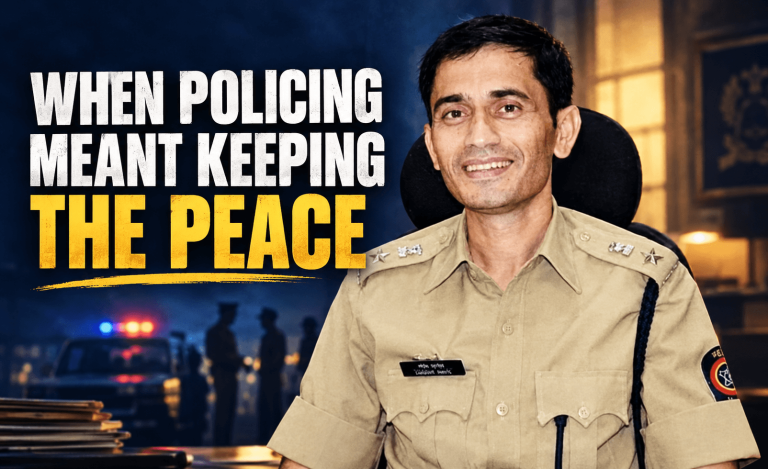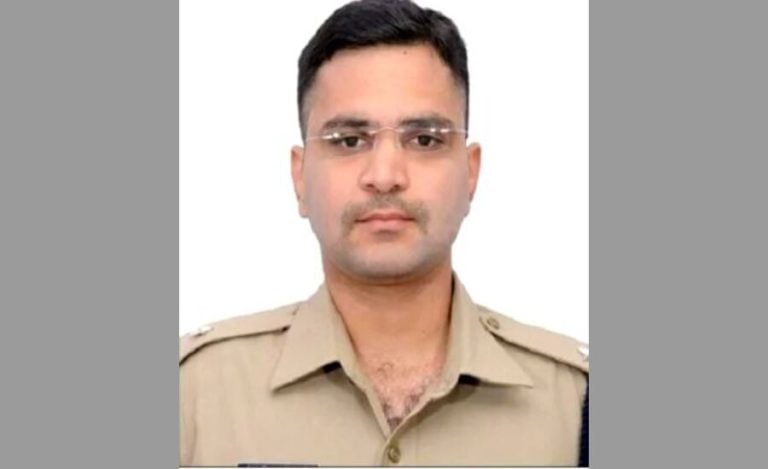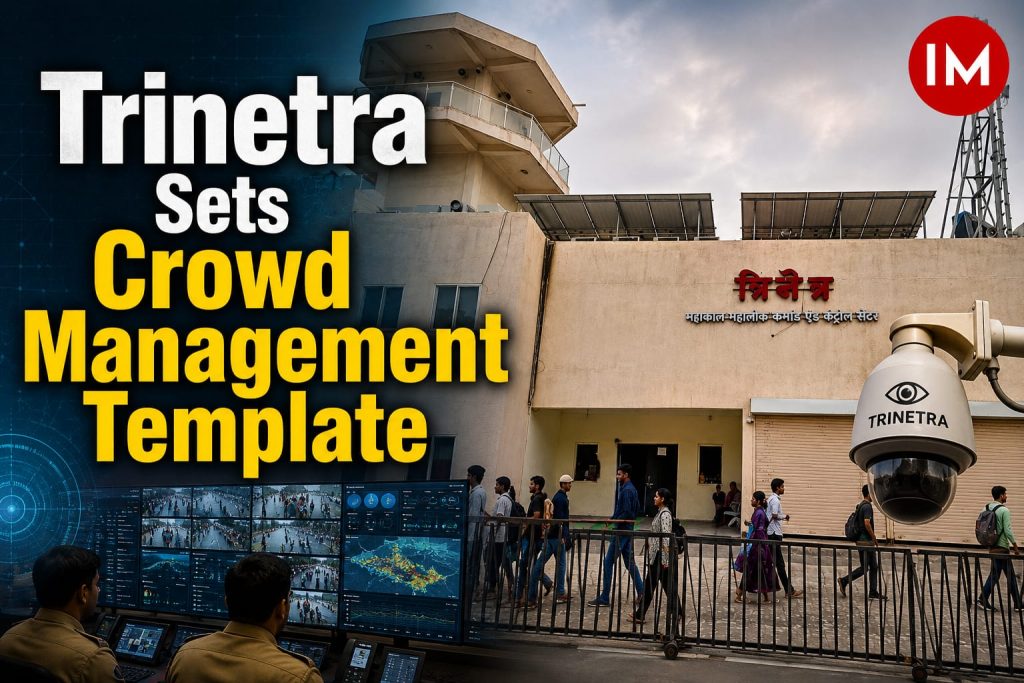
At Mahakaleshwar Temple, the AI-enabled ‘Trinetra’ system is redefining how large religious crowds are managed, combining real-time surveillance, data analytics and coordinated action to enable proactive decision-making. Recognised with a gold at the National e-Governance Awards, the initiative goes beyond technology, highlighting the role of inter-agency coordination and on-ground sensitivity in ensuring safer, smoother pilgrimage experiences, while offering a scalable model for other high-footfall sites across the country. 2022-batch IPS officer, Rahul Deshmukh, closely associated with the system’s on-ground functioning, in an exclusive conversation with Indian Masterminds, talks about, how Trinetra is not merely a technological intervention, but part of a broader administrative evolution that combines data, discipline and human judgement.
Also read: Rising Devotee Footfall Calls for Smarter Temple Management
Mahakal’s ‘Trinetra’ Shows the Way
At a time when managing massive crowds at religious sites continues to challenge administrations across India, Mahakaleshwar Temple has emerged as a model of how technology, planning and coordination can come together to create a safer and more organised pilgrimage experience. The ‘Trinetra’ surveillance system, implemented as part of the Mahakal corridor development, is comprehensive, AI-enabled monitoring framework that is reshaping how authorities respond to dynamic crowd situations.
Spread across the Mahakal Rudrasagar Integrated Development Area, the system integrates hundreds of smart cameras, real-time analytics and coordinated administrative action. Its impact has now been formally recognised with a gold award at the National e-Governance Awards, placing Ujjain at the centre of conversations on smart governance in public spaces. What sets Trinetra apart is its shift from reactive to proactive management. In a temple that witnesses lakhs of devotees, especially after the Mahakal Lok corridor development, anticipating crowd behaviour becomes as critical as managing it.
Functioning and Operational Process of the Trinetra AI Model
The ‘Trinetra’ AI model operates as an advanced, integrated surveillance and decision-support system built on real-time video analytics, edge computing, and automated alert mechanisms. At its core, the system uses conventional CCTV infrastructure into an intelligent monitoring network by embedding AI-driven analytics into every camera feed. Instead of relying on manual observation, the platform continuously scans live footage to detect patterns, anomalies, and crowd dynamics as they unfold.
The operational process begins with data capture through a dense network of cameras deployed across critical zones. These cameras stream live video into an AI engine that processes inputs instantly using edge computing, meaning the analysis happens on-site rather than on external cloud servers. This ensures minimal latency, faster response times, and stronger data privacy, as sensitive visual data does not leave the premises.
Once the video feed is received, the system applies AI-based video analytics to interpret the scene. It can identify crowd density, movement patterns, congestion build-up, and unusual behavioural indicators. Using predefined and customizable detection rules, the system flags specific scenarios such as overcrowding, sudden surges, restricted zone breaches, or abnormal movement flows. This layer essentially converts raw video into actionable intelligence. A key operational feature is the real-time alert mechanism. When the AI detects a threshold breach or risk indicator, alerts are triggered within seconds and transmitted to officials through multiple channels such as dashboards, mobile notifications, or messaging platforms. This rapid communication loop enables authorities to intervene immediately, whether by diverting crowd flow, opening additional entry points, or deploying personnel to specific locations.
All inputs and alerts are consolidated into a centralised command and control dashboard, which acts as the nerve centre of operations. From here, officials can monitor live camera feeds, review flagged incidents, analyse historical data, and make coordinated decisions. The dashboard also provides insights into trends over time, helping in planning for peak periods and improving resource allocation.
Another critical component is predictive and adaptive intelligence. By analysing historical data, such as previous crowd volumes, time-based trends, and event-specific patterns, the system supports anticipatory planning. Authorities can estimate likely crowd surges, identify peak hours, and prepare deployment strategies in advance, thereby shifting from reactive control to proactive management. Importantly, the system is designed to be scalable and interoperable, working with existing CCTV infrastructure without requiring major hardware changes. This allows rapid deployment across large areas and makes it adaptable for different environments, from temple complexes to urban public spaces.
Seeing the Crowd Before It Becomes a Crisis
At the heart of Trinetra lies a network of PTZ (Pan-Tilt-Zoom) cameras strategically installed at what officials describe as “pressure points”, areas where crowd density tends to spike. These include entry gates, exit routes and key congregation zones across the temple complex.
According to the officer, the system ensures that the entire route taken by devotees, from entry to exit, remains under continuous observation. This comprehensive visual coverage allows authorities to identify where crowds are building up in real time. In one instance during a major festival, a sudden surge at a particular gate was immediately detected through the system, enabling officials to quickly open an alternate access point and ease congestion before it escalated.
This ability to respond instantly is what makes Trinetra far more than a surveillance tool. It acts as an early warning system, helping authorities intervene before situations turn critical, thereby reducing the risk of stampedes or chaos.
Beyond Surveillance: The Role of AI and Predictive Planning
While cameras form the backbone, the real strength of Trinetra lies in its use of data for predictive management. The system draws upon patterns observed during peak events such as Mahashivratri, Sawan, New Year and even long weekends, when religious tourism sees a sharp rise.
Officials note that crowd behaviour is not random. There are predictable spikes, late-night queues during Mahashivratri, evening rushes from nearby districts, or sudden surges during extended holidays. By correlating CCTV inputs, vehicle movement and headcount data, authorities are able to anticipate footfall trends and prepare accordingly, based on ‘Predictive Management’ model.
This predictive approach allows for better deployment of personnel, pre-positioning of barricades, and timely traffic diversions. It transforms crowd control from a reactive exercise into a planned operation, where decisions are guided by data rather than guesswork.
A System Built on Coordination, Not Just Technology
One of the most significant insights from the field is that Trinetra’s success does not rest solely on technology. It depends equally on seamless coordination between multiple stakeholders, police, municipal authorities, temple administration, public works departments and even local transport operators.
Managing crowds at a site like Mahakal is not confined to the temple premises. The influx begins from surrounding areas, involving traffic regulation, parking management, removal of encroachments and creation of holding spaces. Each agency has a defined role, from barricading and infrastructure support to on-ground enforcement.
The officer emphasised that effective crowd management requires clarity of responsibilities and constant communication. Rather than placing the burden on a single authority, there is a growing recognition of the need for a centralised committee or nodal system, where each stakeholder contributes within their domain while working towards a shared objective.
Human Challenge of Managing Devotional Crowds
Unlike political rallies or public events, religious gatherings present a unique challenge. Devotees are often emotionally driven, and their expectations are deeply personal. Managing such crowds requires not just discipline, but sensitivity.
Officials point out that even with the best systems in place, cooperation from the public remains crucial. Long waiting hours, high expectations of darshan, and physical fatigue can lead to impatience. In such scenarios, the behaviour of frontline staff becomes critical.
There is a growing emphasis on sensitization, ensuring that personnel deployed on duty interact with devotees respectfully, communicate clearly, and manage situations without aggression. The objective is not just safety, but also preserving the sanctity and experience of the pilgrimage.
Balancing Priorities Within the System
An interesting dimension that emerges is the difference in priorities among stakeholders. While the police focus primarily on safety and orderly movement, temple authorities often prioritise the quality of darshan and devotee experience.
Rather than being a conflict, this is seen as a natural difference in orientation. The challenge lies in aligning these priorities through dialogue and adaptive planning. For instance, during peak crowd conditions, ensuring safe exit may take precedence, while during lean periods, focus can shift to improving the quality of services.
Such dynamic adjustments highlight the importance of flexibility within the system, where decisions are taken based on real-time conditions rather than rigid protocols.
Replicating the Model, Adapting to Reality
With Trinetra gaining national attention, discussions have begun on its replication at other major religious sites. However, officials caution against a one-size-fits-all approach.
Every temple has its own geographical and structural constraints. While Mahakal benefits from relatively open corridors, places like Omkareshwar or hill temples such as Maihar Dham, present unique challenges in terms of space and accessibility.
What can be replicated, however, are the core principles, one-way crowd flow, separation of entry and exit routes, clear signage, real-time monitoring and inter-agency coordination. These foundational elements form the backbone of effective crowd management, regardless of location.
The Road Ahead: Technology with Sensitivity
Looking forward, there are plans to further strengthen the system with additional technologies such as drone surveillance to monitor vehicular inflow and better estimate incoming crowd volumes. Such integrations could enhance the ability to forecast peak hours and manage resources more efficiently.
At the same time, there is an awareness of the need to balance surveillance with privacy. Officials stress that data collection must remain limited to what is necessary for security and management, and that technology should not become intrusive.
Ultimately, the success of Trinetra lies in its balanced approach, combining technology with human judgement, data with empathy, and surveillance with service. As India continues to witness growing footfall at its religious destinations, the Ujjain model offers a blueprint for the future, where the goal is not just managing crowds, but ensuring that every devotee’s journey remains safe, smooth and dignified.
Also read: E20 Controversy: Can India Balance Energy Security with Consumer Trust?