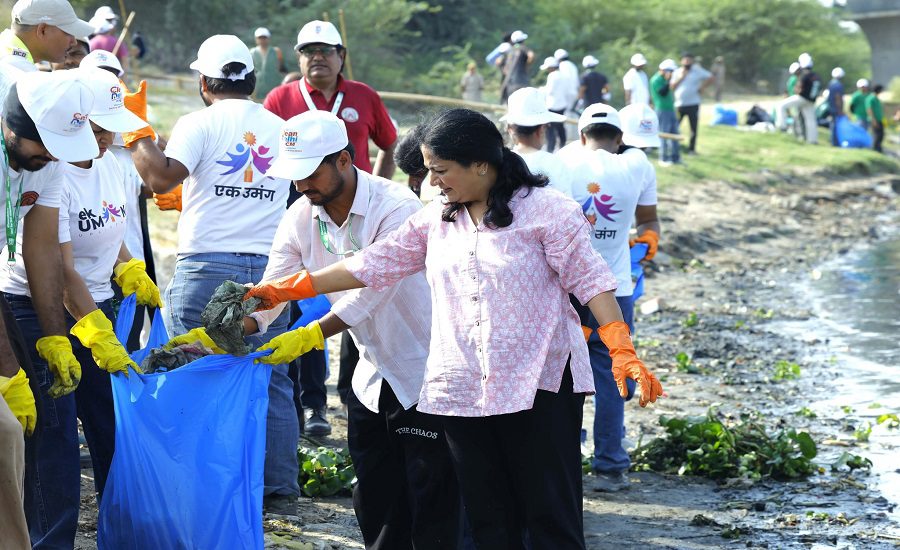
New Delhi: The Delhi government has intensified its efforts to clean the Yamuna River by transforming the initiative into a large-scale public participation movement rather than a purely administrative exercise. Chief Minister Rekha Gupta led a mega cleanliness drive on Sunday at Chilla village in East Delhi’s Yamuna Khadar area, emphasizing community involvement in restoring the river’s health.
The initiative aims to make Yamuna cleaning a long-term environmental mission combining scientific planning, infrastructure upgrades, and active citizen engagement.
CM Rekha Gupta Joins Cleanliness Drive at Yamuna Khadar
During her visit to the riverfront, the Chief Minister personally participated in the cleanliness campaign by picking up waste and interacting with volunteers and residents.
She appealed to citizens to dedicate time towards keeping the Yamuna clean and stressed that meaningful change can only be achieved through collective responsibility rather than government efforts alone.
A large number of youth volunteers, local residents, and social organizations joined the mega cleanliness drive, making it a significant public event focused on environmental awareness.
Interaction with Local Communities and Children
As part of her visit, CM Rekha Gupta also met children living in a nearby service settlement and took stock of their educational needs. She directed local MLA Ravikant Ujjainwal and concerned officials to ensure timely access to all necessary educational facilities so that no child’s education is disrupted.
The engagement highlighted the government’s focus not only on environmental issues but also on social welfare in riverfront communities.
Government’s Long-Term Plan for Yamuna Restoration
The Delhi government stated that the Yamuna cleaning initiative is not limited to riverbank sanitation but is part of a broader environmental restoration strategy.
Key measures include:
- Diverting and treating drains that discharge into the Yamuna
- Preventing untreated sewage from entering the river
- Strengthening waste management systems along the riverbanks
Officials emphasized that these steps are being implemented in a phased manner to ensure long-term impact.
Special Collection Centres for Ritual Waste
To address religious and ceremonial waste, the government is setting up dedicated collection points known as “porta cabins” across Delhi. These centres will allow residents to deposit:
- Puja materials
- Broken idols and religious items
The collected waste will then be processed using scientific and environmentally safe recycling and disposal methods to prevent pollution of the river.
Weekly Public Campaigns Every Sunday
CM Rekha Gupta announced that the Delhi government will conduct public awareness and action campaigns every Sunday. These will include:
- Cleanliness drives
- Yamuna river cleaning activities
- Tree plantation programmes
She urged citizens to actively participate in these initiatives, stating that only a combined effort between the government and the public can achieve the goal of a clean and flowing Yamuna.
Yamuna Cleaning as a Sustainable Environmental Mission
The government reiterated that the Yamuna rejuvenation project is a long-term mission rather than a one-time campaign. It will rely on:
- Scientific methods
- Strong infrastructure development
- Continuous public participation
Officials believe this integrated approach will serve as a strong foundation for restoring the river’s ecological balance.
With direct leadership from Chief Minister Rekha Gupta and increasing citizen involvement, Delhi’s Yamuna cleaning initiative is being reshaped into a sustained environmental movement. The government aims to ensure a cleaner, healthier, and more sustainable river system through coordinated action and public responsibility.