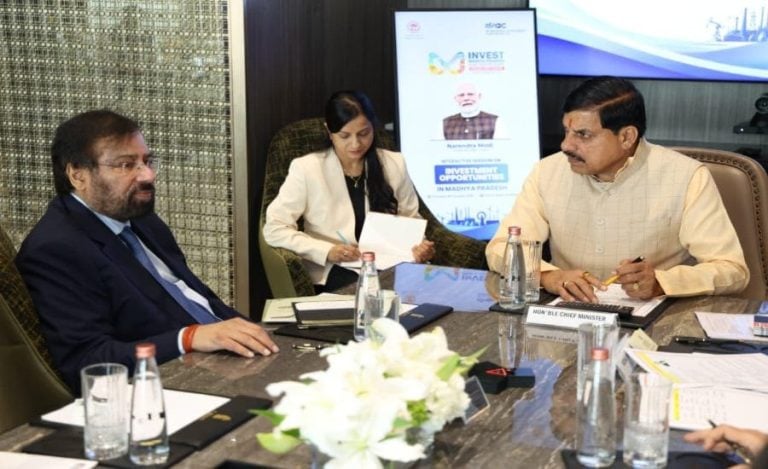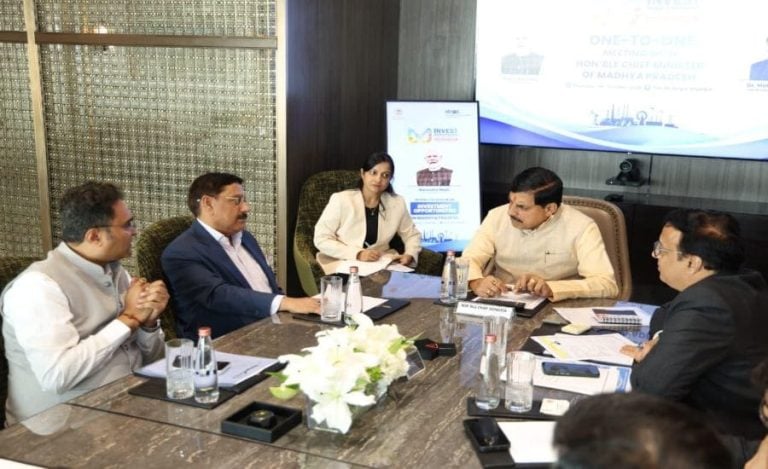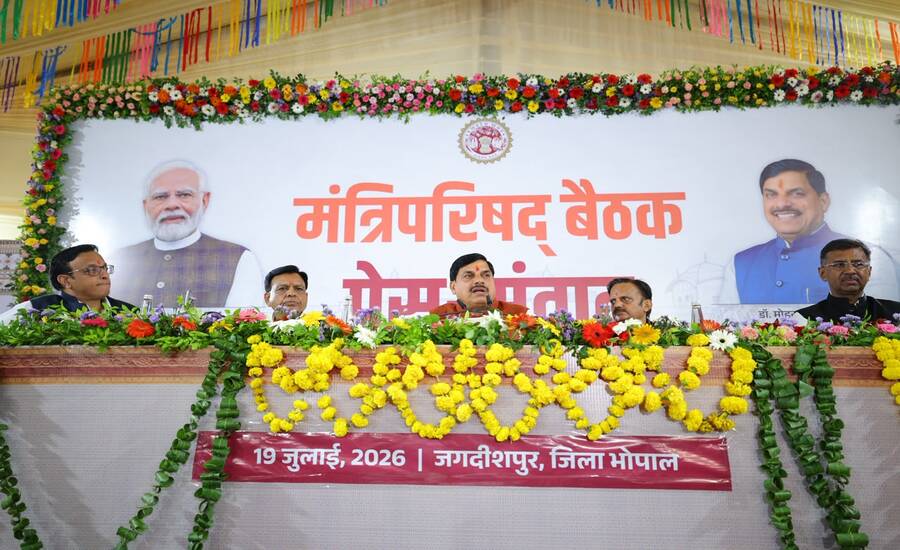
Bhopal: In a landmark decision that could redefine personal civil laws in Madhya Pradesh, the Cabinet chaired by Chief Minister Dr Mohan Yadav on Saturday approved the Madhya Pradesh Uniform Civil Code (UCC), 2026, making the state one of the few in the country to adopt a common civil law framework for all citizens irrespective of religion.
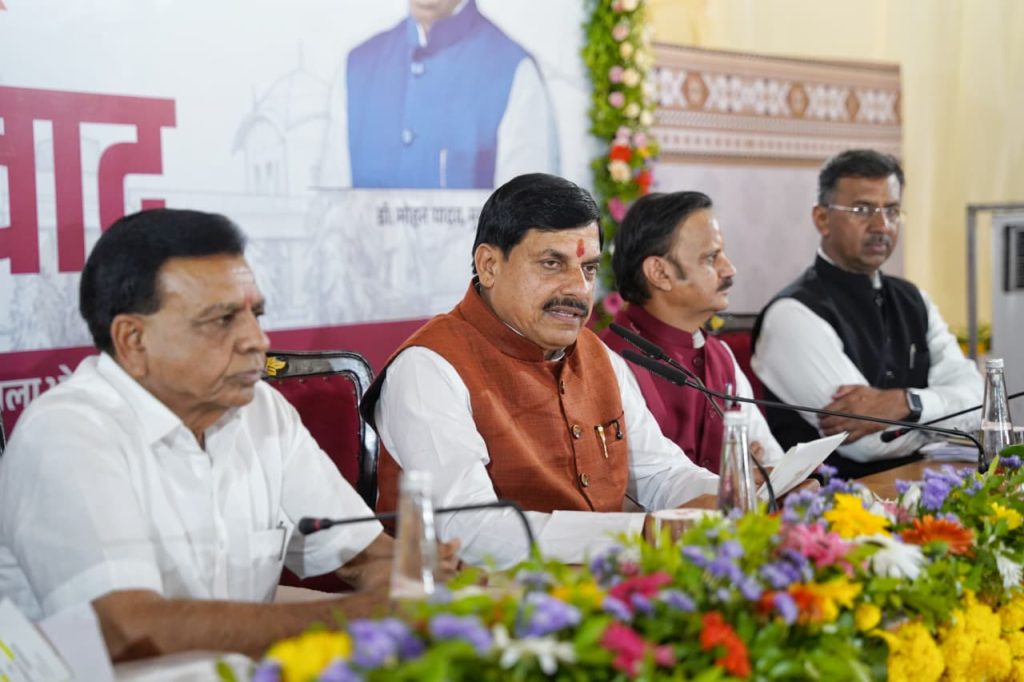
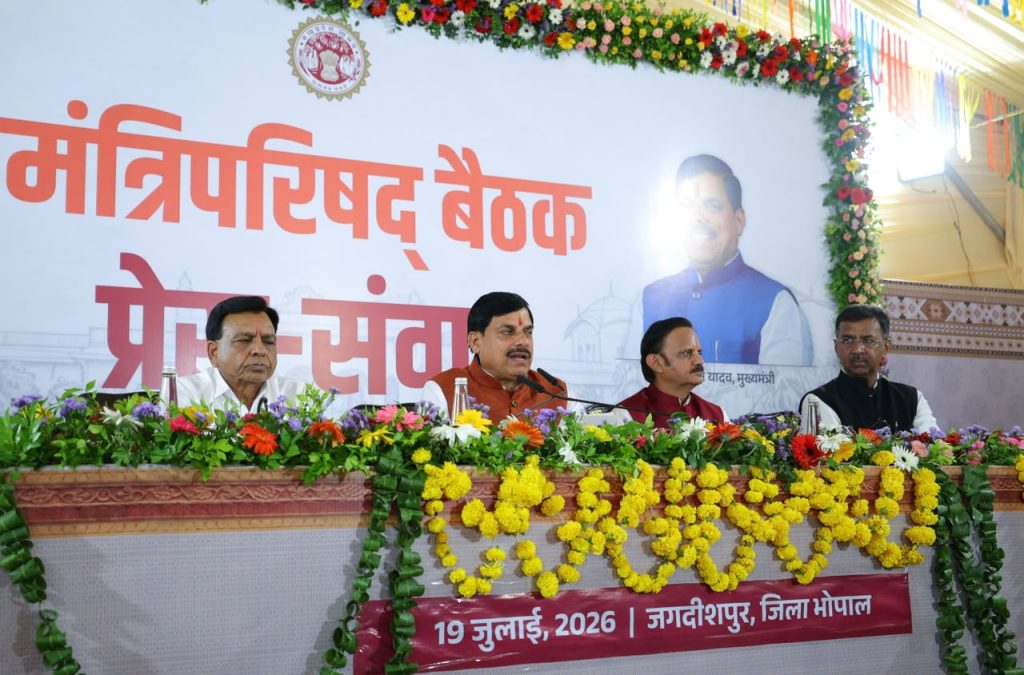
The historic decision was taken during a special Cabinet meeting held in Jagdishpur. Addressing the media after the meeting, Chief Minister Dr Yadav described the UCC as a major constitutional step towards ensuring equality, justice, gender empowerment and secularism, while emphasizing that religious customs and traditional practices consistent with public morality and public policy would continue to be protected.
The Code seeks to establish a uniform legal framework governing marriage, divorce, maintenance, inheritance, succession and live-in relationships, replacing differing personal laws applicable to various communities. However, Scheduled Tribes covered under Articles 342 and 366(25) of the Constitution have been exempted, respecting constitutional safeguards.
Based on Constitutional Vision
Chief Minister Mohan Yadav said the Code has been drafted in accordance with Article 44 of the Constitution, which directs the State to endeavour to secure a Uniform Civil Code for citizens throughout India.
He said the proposed legislation aims to eliminate discrimination, particularly against women, and provide equal legal rights irrespective of religion. The draft has also drawn from the experience of Uttarakhand (2024), Gujarat (2026), and Assam (2026), where similar legal frameworks have been introduced.
According to the Chief Minister, the Code modernises personal civil laws by replacing inconsistent and often unwritten practices with a transparent and legally enforceable system.
Scheduled Tribes Kept Outside UCC
One of the significant features of the proposed legislation is that it will not apply to Scheduled Tribes, including communities such as Bhil, Gond, Korku, Baiga, Sahariya and Bharia, whose customary rights enjoy constitutional protection.
Communities protected under Part XXI of the Constitution have also been specifically exempted.
Major Reforms in Marriage and Divorce Laws
The UCC introduces sweeping reforms in matrimonial laws across communities.
It mandates monogamy, allowing only one legally recognised spouse at a time, and completely abolishes practices such as Triple Talaq, oral divorce and decisions delivered through informal community panchayats. It also declares Nikah Halala and any coercion or promotion of such practices as punishable criminal offences.
The legal minimum marriage age has been fixed at 21 years for men and 18 years for women.
Marriages obtained through invalid consent or prohibited relationships—unless specifically permitted by recognised customs—will not be valid.
Only statutory grounds recognised under law will permit divorce.
Women have also been granted the right to seek annulment if, at the time of marriage, the husband had already impregnated another woman.
Registration of marriages and divorces has been made compulsory through the MP e-Nagarpalika Portal in urban areas and designated authorities such as SDMs, municipalities or gram panchayats in rural areas.
Equal Rights for Every Child
The Code abolishes the legal distinction between “legitimate” and “illegitimate” children.
Children born through marriage, live-in relationships, adoption, surrogacy or Assisted Reproductive Technology (ART) will all enjoy equal legal status and inheritance rights.
In child custody disputes, courts will primarily consider the best interests and welfare of the child rather than parental claims.
Uniform Succession and Equal Property Rights
The proposed legislation introduces a gender-neutral succession system.
Sons and daughters will receive equal inheritance rights irrespective of marital status.
Widows and widowers will enjoy identical succession rights, while both parents will be recognised as Class-I legal heirs of a deceased child alongside the spouse and children.
The Code also bars any individual convicted of murdering or abetting the murder of a property owner from inheriting that person’s assets.
Where no legal heirs exist, the property will vest in the State under the doctrine of escheat.
Complete Freedom to Make Wills
The UCC allows any adult of sound mind to dispose of 100% of both self-acquired and ancestral property through a will.
The provision removes earlier restrictions found under certain personal laws, including limits on testamentary succession.
Such wills will continue to be governed under the Indian Succession Act, 1925.
Live-in Relationships to Come Under Legal Regulation
Perhaps one of the most discussed provisions is the legal framework governing live-in relationships.
Couples entering a live-in relationship will be required to submit a statement of live-in relationship within one month of beginning cohabitation.
Both partners must:
- Be at least 18 years of age.
- Be unmarried.
- Not fall within prohibited relationships.
- Enter the relationship voluntarily.
If either partner is below 21 years, information regarding the beginning and termination of the relationship will also be communicated to parents or guardians.
The registrar will simultaneously forward the information to the concerned police station.
Protection for Women in Live-in Relationships
The Code provides legal safeguards to women in live-in relationships.
If a male partner abandons the relationship, the woman will be entitled to seek maintenance through the courts, similar to rights available to legally married women.
Children born from such relationships will be treated as legitimate and will enjoy full inheritance rights.
Strict penalties have also been prescribed for violations:
- Failure to register a live-in relationship within one month may attract up to three months’ imprisonment or a fine of ₹10,000.
- Furnishing false information may result in three months’ imprisonment and a ₹25,000 fine.
- Ignoring a registrar’s notice could invite up to six months’ imprisonment along with a ₹25,000 fine.
Towards Uniform Civil Justice
Chief Minister Mohan Yadav said the legislation represents a significant constitutional reform aimed at providing equal rights, legal certainty, gender justice and social harmony while respecting India’s diversity.
According to the government, the proposed Uniform Civil Code seeks to replace fragmented personal laws with a transparent legal framework that ensures equal treatment for all citizens without interfering with constitutionally protected customs and traditions.