Long before he became known as Haryana’s “Rainwater Recharge Man,” Dhuman Singh Kirmach was simply a farmer’s son growing up in Kirmach village.
His childhood unfolded in the fields of Haryana, where life moved with the rhythm of the seasons. Rain was never just weather. It determined harvests, incomes, and the future of entire families.
Like countless rural children, he attended school during the day and spent evenings helping his family in the fields. There, he learned a lesson that would shape the course of his life.
Without water, there is no agriculture. Without agriculture, there is no rural life.
Years later, even after earning degrees in law, completing his LLB and LLM, and establishing himself as a legal professional, those lessons from the fields never left him.
While others saw water scarcity as a shortage of rainfall, Dhuman Singh saw a different problem altogether. Haryana was receiving rain. The real issue was that the rain was not staying in Haryana.
Millions of litres rushed away through drains, rivers, and flood channels every monsoon.
“What we lacked was not water. What we lacked was water management,” he shared in an exclusive conversation with Indian Masterminds.
Also read: A Call From the Homeland: How IAS Ravindra Goswami’s ‘Aao Gaon Chalen’ Is Bringing Pali’s Global Community Back to Its Roots
A FARMER’S EXPERIMENT THAT STARTED A MOVEMENT
His mission began not in government offices but on his own land. As a young farmer, he was disturbed by the amount of irrigation water being wasted in conventional farming.
“From childhood, I had a passion for saving water,” he recalls. “Our landholding was large, and I could see how much water was being wasted in the fields.”
Determined to find a solution, he installed underground pipelines across nearly 30 acres of farmland, an uncommon practice in the region at the time.
The results were remarkable. Water losses reduced significantly. Irrigation became more efficient. Soon, neighbouring farmers began adopting the same approach.
What started as a personal experiment quickly became a community conversation. Then came awareness campaigns, seminars, and school outreach programs.
“We started visiting schools and educating children,” says Dhuman Singh. “Over time, lakhs of students became part of this campaign.”
A growing movement had begun.
LOOKING BENEATH THE SURFACE
As groundwater levels continued to decline across Haryana, Dhuman Singh searched for practical solutions that could be implemented quickly and affordably.
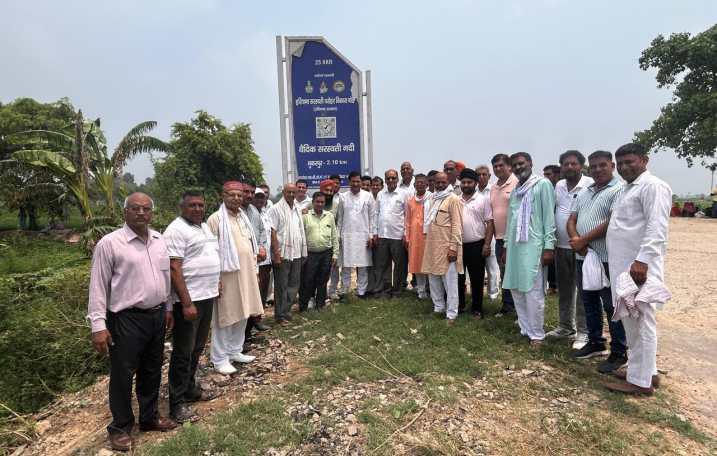
His attention turned toward a forgotten resource scattered across rural landscapes: abandoned wells. Across villages, hundreds of old wells lay unused and neglected. Most people saw them as relics of the past. He saw recharge structures waiting to be revived.
Beginning with the well on his own farm, he started diverting rainwater into abandoned wells so that it could percolate naturally into the ground. The impact was immediate.
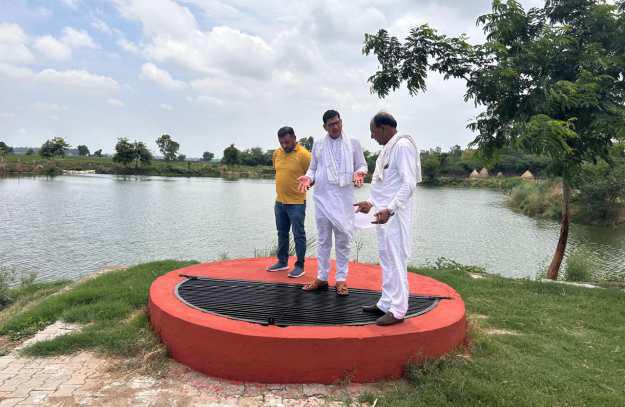
Groundwater recharge improved, and local water levels responded positively. Encouraged by the results, he expanded the effort across villages, eventually helping reopen and utilize more than 230 abandoned wells for groundwater recharge.
The journey was not easy. Many landowners resisted.
“People initially said they would not give their wells,” he remembers. “But we continued creating awareness, obtained approvals where required, and showed them the results.”
Once people witnessed the benefits, opposition gradually gave way to participation.
NEER: GIVING SHAPE TO AN IDEA
By 2009, Dhuman Singh understood that isolated projects could not solve a statewide crisis. The challenge demanded a larger public movement.
That year, he founded NEER (Natural Ecology & Environmental Responsibility), a grassroots organisation dedicated to water conservation, environmental protection, and public awareness.
The philosophy behind NEER was straightforward: Every drop of rainwater that leaves Haryana without recharging the earth is a lost opportunity.
Through school campaigns, plantation drives, pond rejuvenation efforts, farmer workshops, and environmental education programs, NEER spread across Haryana and neighbouring regions.
The movement eventually reached nearly eleven lakh students and thousands of citizens.
The message remained consistent: Capture rain where it falls. Store it. Recharge it. Use it wisely.
TURNING FLOODS INTO GROUNDWATER
As his field experience expanded, Dhuman Singh developed what would later become known as the Haryana Rainwater Recharge Model.
Its principles were simple yet transformative:
- Capture monsoon runoff
- Store floodwater locally
- Recharge groundwater naturally
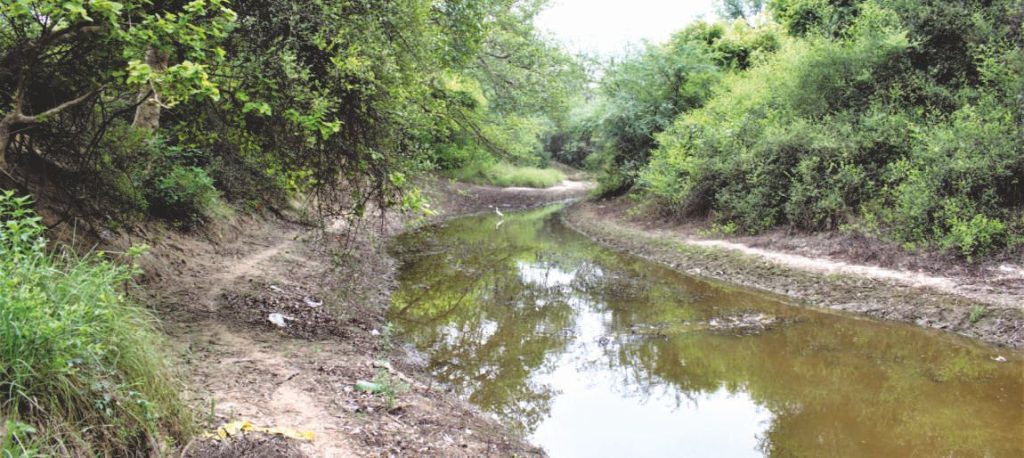
- Revive traditional water channels and reservoirs
Instead of relying entirely on expensive infrastructure, the model focused on natural depressions, ponds, paleo-channels, reservoirs, village lands, and recharge structures.
Its objective could be summed up in four words: ‘Turn floods into groundwater.’
At a time when floodwaters were often viewed as a threat, he began seeing them as an opportunity. Every monsoon, he believed, Haryana was receiving a gift. The challenge was ensuring that gift remained underground for future generations.
FROM SOCIAL WORKER TO STATEWIDE WATER ARCHITECT
The growing impact of his work soon attracted the attention of policymakers.
In 2020, the Haryana Government appointed him Vice-Chairman of the Haryana Sarasvati Heritage Development Board. For many, the Board was primarily associated with the ancient Sarasvati River.
For Dhuman Singh, it represented something much bigger. A statewide groundwater recharge network.
“Chief Minister Manohar Lal Khattar saw the work we were doing and entrusted us with this responsibility,” he told Indian Masterminds.
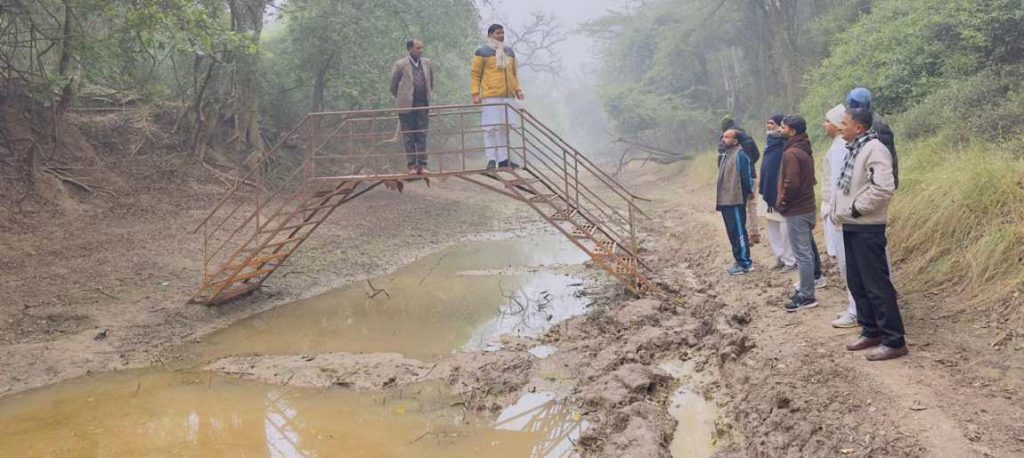
Under his leadership, ancient river channels were reimagined as recharge corridors, reservoirs became groundwater banks, and floodwaters became a long-term water resource.
BUILDING A CHAIN OF RECHARGE RESERVOIRS ACROSS HARYANA
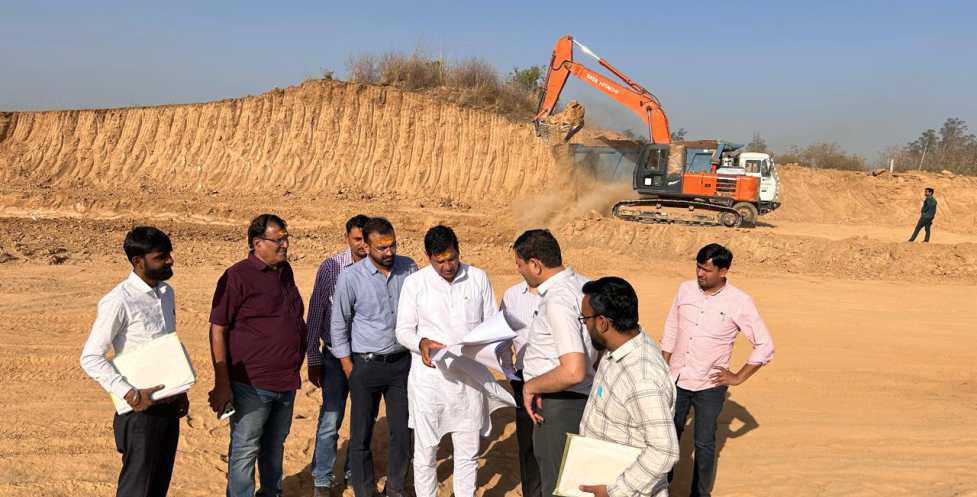
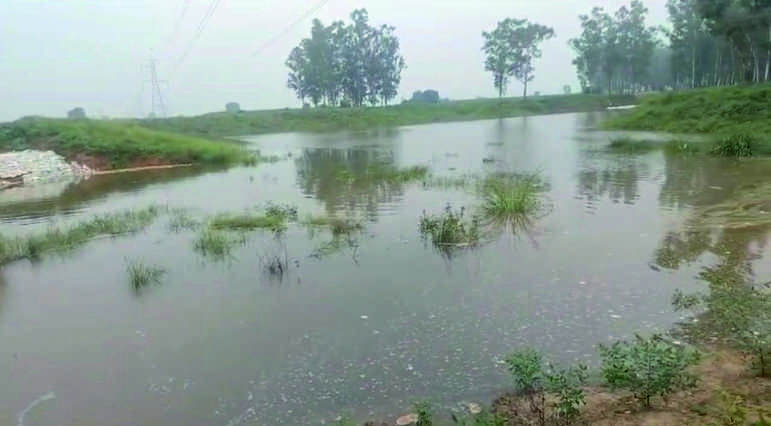
Over the last several years, Dhuman Singh has led the development of nearly twenty major recharge reservoirs and conservation structures across the Sarasvati river system.
Together, they form a vast network stretching from Yamunanagar through Kurukshetra, Kaithal, Jind, Fatehabad, and Sirsa.
Among the most significant projects is the Sarasvati Sarovar Mega Project spread across 350 acres in Rampur Hediyan, Rampur Kamboyan, and Chhalaur villages of Yamunanagar district.
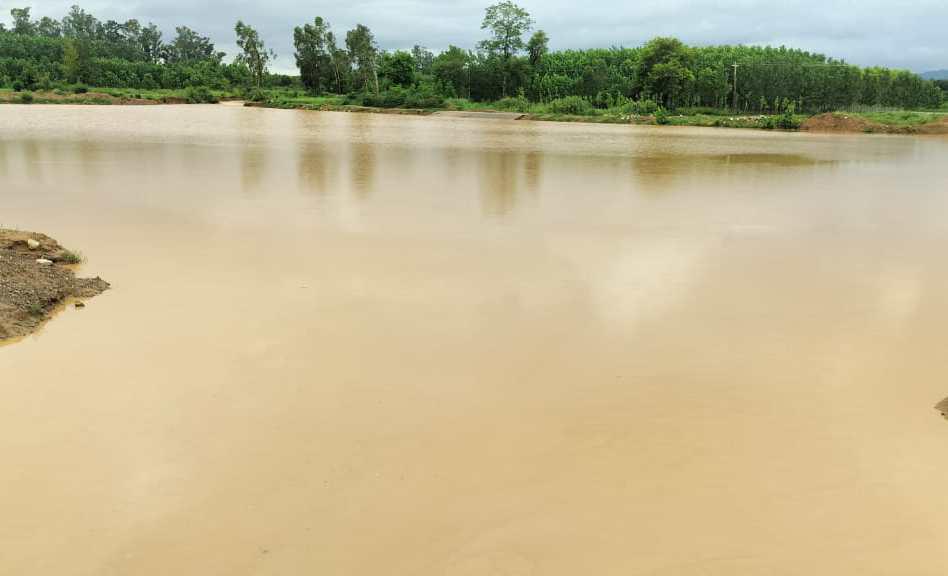
With more than 12 lakh cubic metres of excavation already completed, the reservoir is expected to recharge nearly 150 crore litres of water every monsoon season.
Near Adi Badri, the Mughalwali Recharge Project has created a four-acre reservoir capable of storing and recharging nearly 9 crore litres.
At Sanghor, a reservoir linked to the ancient site associated with Rishi Shringi is expected to recharge more than 20 crore litres annually.
The Bhagwanpura Reservoir combines archaeological preservation, flood management, and groundwater recharge, with a storage capacity of around 7 crore litres.
The Rampura Sarasvati Sarovar stores more than 4 crore litres at a time and has already demonstrated substantial benefits for surrounding villages.
At Marchehri, community participation through local panchayats helped create a recharge reservoir contributing nearly 30 crore litres annually.
Meanwhile, the Bohli Sarasvati Sarovar has emerged as one of Haryana’s most effective groundwater recharge projects, contributing approximately 50–60 crore litres every year.
AN INNOVATION THAT TREATS WASTEWATER TOO
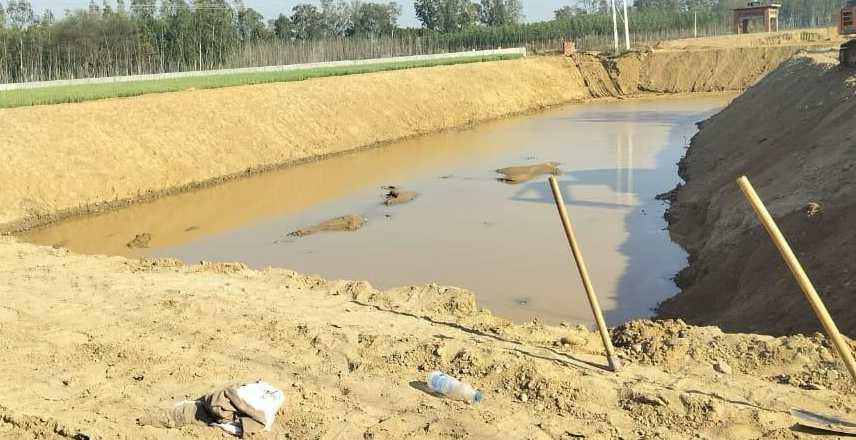
Among the most innovative initiatives is the Kaulapur Three-Pond Treatment System. The project treats village wastewater naturally before directing it into recharge reservoirs and eventually into the Sarasvati channel.
It demonstrates how wastewater management and groundwater recharge can complement each other rather than operate as separate systems.
A BIGGER VISION FOR HARYANA
Even today, Dhuman Singh believes the work has only begun.
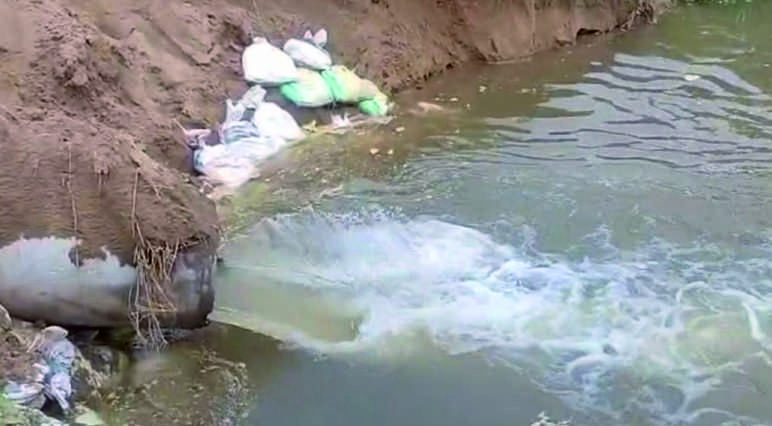
Projects under development include the Bibipur Lake Development Project, Bodla Reservoir, Azimgarh Water Storage Corridor, Kanthala Supply Channel Project, Satoda Creek Restoration, Linda Nallah Revival, Sarasvati Jungle Recharge Corridor, Wildlife Reservoir Systems, Floodwater Diversion Projects, and Markanda-Sarasvati Water Linkage initiatives.
Collectively, these efforts aim to create one of India’s largest groundwater recharge networks.
THE MESSAGE HE WANTS EVERY YOUNG INDIAN TO HEAR
On World Environment Day, Dhuman Singh’s message is direct and urgent.
“Water is going to become one of the biggest challenges of the future,” he says. “If we save water today, future generations will live peacefully. The real question is, what are we leaving behind for them?”
For him, conservation is not merely an environmental concern. It is a responsibility. A responsibility toward farmers. Toward villages. Toward future generations. And toward every drop of rain that falls on Indian soil.
A LEGACY WRITTEN UNDERGROUND
Many people measure success through monuments visible above the ground.
Dhuman Singh Kirmach’s work is different.
His achievements lie beneath the surface, in rising groundwater tables, revived wells, replenished aquifers, and villages that are slowly regaining water security.
From installing pipelines on his own farm to reopening abandoned wells, from mobilizing lakhs of students to designing large-scale recharge reservoirs, he has spent decades pursuing a single idea.
“The future of Haryana depends not on how much water we extract, but on how much water we return to the earth.”
And across Haryana, every monsoon now leaves behind a growing reminder of that belief—millions of litres of water finding their way back home into the soil.
Also read: World Environment Day Special: Using AI, Drones & Digital Innovation to Protect Wildlife and Forests