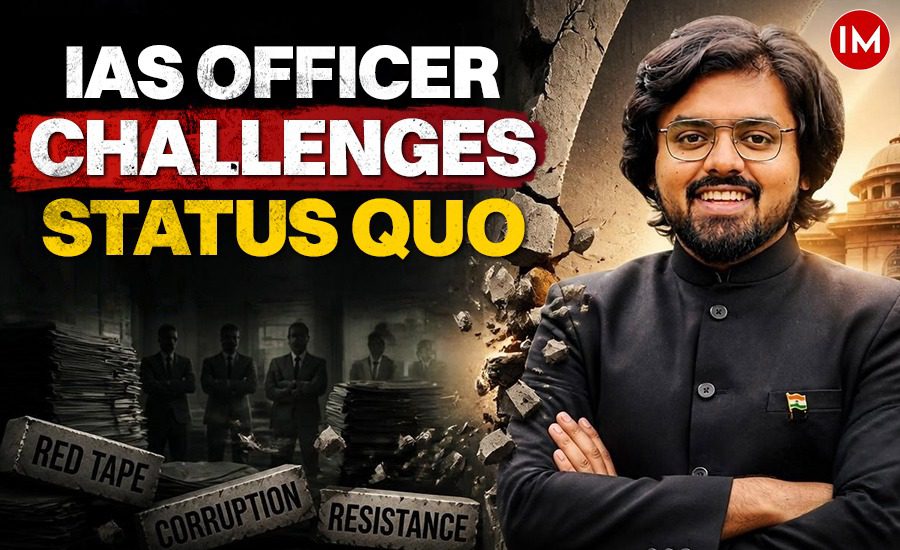
Dilip K. Kainikkara, a 2022-batch IAS officer currently serving as Sub Collector of Tirur in Keralam, has recently drawn attention for his reform-oriented views on governance, education, and administrative efficiency. An alumnus of Indian Institute of Technology Madras and a former artificial intelligence researcher, he entered Civil Services after securing AIR 21 in the UPSC Civil Services Examination 2021. His observations, shaped by field experience in public administration, focus on improving governance delivery, strengthening education outcomes, and making public systems more citizen-centric.
Technocrat-turned-administrator with strong views
“I chose public service because it allows you to engage with real problems at scale, where both policy and empathy must converge.”
An alumnus of Indian Institute of Technology Madras, Dilip K. Kainikkara represents a new generation of civil servants who bring with them, technical depth and administrative purpose. Clearing the UPSC Civil Services Examination with an impressive All India Rank of 21 in 2021, after previously qualifying the Indian Forest Service, shows both persistence and clarity of purpose. Now serving in Tirur, his role extends beyond routine governance into influencing broader administrative conversations. His profile mirrors a larger shift within the bureaucracy, where officers are increasingly engaging with structural issues rather than remaining confined to procedural roles.
Read Also: Development on Trial as Judiciary Weigh Growth Against Ecology
Reform wishlist: Administrative efficiency to education overhaul
“Smaller Administrative units are efficiently managed; reforms must focus on efficiency, experience utilisation, and outcomes that directly improve governance.”
At the heart of Kainikkara’s reform list, lies a consistent emphasis on administrative efficiency and outcome-oriented governance. He has made a strong case for the bifurcation of large districts, arguing that units encompassing 10 to 15 constituencies often become unwieldy, slowing decision-making and stretching resources thin. In his view, smaller administrative units can enhance responsiveness and ensure that governance reaches citizens more effectively.
Alongside structural reforms, his comments on pension policy have sparked debate, particularly his argument that individuals remain productive well into their 60s and that this experience should be harnessed rather than prematurely retired. He frames this not merely as a fiscal necessity but as a demographic opportunity in a country like India. His broader reform thinking reflects a balance between structural reorganisation and human resource optimisation, indicating a pragmatic approach rooted in field-level challenges rather than abstract theorisation.
Education: The Core of His Reform Agenda
“If there is one reform to prioritise, it is improving basic learning outcomes: education must align with real competencies, not just formal grading.”
Education emerges as the most detailed and deeply felt component of Kainikkara’s reform vision, shaped significantly by his field visits, particularly to tribal residential schools. He points to a persistent disconnect between curriculum design and ground realities, where students often struggle despite being part of an expanding education system. His critique of overly liberal grading systems is rooted in the belief that education must ensure a minimum threshold of competencies, rather than merely facilitating progression through grades.
At the same time, he strongly advocates that language should not act as a barrier, either in school education or higher learning, especially in a diverse country where linguistic divides can influence access and outcomes. Initiatives like the THRIVE programme (Tribal Higher Education and Interactive Ventures for Excellence), where college students volunteer to mentor children in tribal schools, reflect his inclination towards community-driven solutions that complement institutional efforts. His emphasis on increasing investment in education further underlines the need to prioritise human capital development as a long-term national strategy.
Citizen-Centric Governance and Digital Access
“Public systems must evolve to become more accessible, citizens should be able to engage with administration without barriers.”
A recurring theme in Kainikkara’s administrative outlook is the need to make governance more citizen-centric and accessible. He highlights examples within Kerala where people can interact virtually with district collectors to raise grievances, a model that reduces physical and procedural barriers to governance. For him, such mechanisms are not just technological innovations but essential democratic tools that enhance accountability and responsiveness.
His approach suggests that governance must move beyond traditional office-based interactions and adapt to the expectations of a digitally connected population. By advocating for systems that are both transparent and approachable, he emphasizes the importance of trust in public administration. This vision aligns with broader trends in governance where technology is increasingly used to bridge the gap between citizens and the state, making service delivery more efficient and inclusive.
Social Media, Bureaucracy, and the Fine Balance
“Officers can offer constructive criticism, but it must be balanced, credibility of the State should never be diluted.”
In addressing the evolving role of civil servants in the public sphere, Kainikkara adopts a measured stance on the use of social media. While he acknowledges that officers today have greater visibility and the ability to contribute to public discourse, he stresses the importance of maintaining institutional integrity. According to him, constructive criticism is valuable and even necessary for reform, but it must be expressed in a manner that does not undermine public trust in governance structures.
This perspective shows the delicate balance that modern bureaucrats must maintain, being transparent and engaged, yet restrained and responsible. His views comes at a time when the lines between administrative roles and public commentary are increasingly blurred, raising important questions about accountability, neutrality, and the evolving nature of public service.
A Larger Debate in a Changing Political Context
“Reforms gain urgency in moments of political transition, when governance priorities are being reassessed.”
The timing of Kainikkara’s remarks has amplified their impact, coming as they do in the wake of shifting political dynamics in Kerala. His ideas have found both support and resistance, reflecting the inherently contested nature of public policy debates. Proposals such as raising the pension age or reorganising district boundaries are not merely administrative decisions but politically sensitive issues that intersect with public sentiment and electoral considerations. In this context, his interventions have contributed to a broader discourse on how governance systems must evolve to meet changing socio-economic realities.
Beyond Policy: Message to Aspirants
“There is no shortcut to social reform, aspirants must be driven by a genuine commitment to service.”
Even as his policy perspectives generate debate, Dilip K. Kainikkara continues to engage actively with civil service aspirants, offering guidance drawn from his own journey. His emphasis on pursuing public service as a calling rather than merely a career choice reflects a grounded understanding of the demands of the service. He encourages aspirants to align their motivations with the larger purpose of governance and societal impact, rather than focusing solely on the prestige associated with the services.
His own trajectory, from a corporate career, artificial intelligence to public administration, serves as an example to the role of perseverance and clarity in achieving such goals. This engagement also highlights the growing trend of young officers mentoring the next generation, thereby shaping not just policy discourse but also the future of the bureaucracy itself.
The Road Ahead
“The real test of reform ideas lies not in articulation, but in their translation into meaningful change on the ground.”
Irrespective of the future of the reforms articulated, Dilip K. Kainikkara has already made a notable impact by catalysing discussion on key governance issues. In a politically aware and debate-driven State like Keralam, such interventions contribute to a richer and more nuanced public discourse. His ideas have foregrounded questions about administrative efficiency, educational quality, and citizen engagement, all of which remain central to the future of governance in India.
The broader significance of his intervention lies in a shift towards a more vocal and reform-oriented bureaucracy, where young officers are willing to articulate and defend ideas in the public domain. As these debates continue to evolve, the focus will increasingly shift from intent to implementation, determining whether such visions can turn into tangible improvements on the ground.
Read Also: Coastal City Dreams Bigger: Vision turning Vizag into a Global Data Destination