In a quiet corner of Rajasthan, a silent transformation took shape – one that did not rely on grand announcements but on small, consistent changes inside classrooms, communities, and minds. Sawai Madhopur, often known for its wildlife and tourism, began making news for something far more fundamental: education.
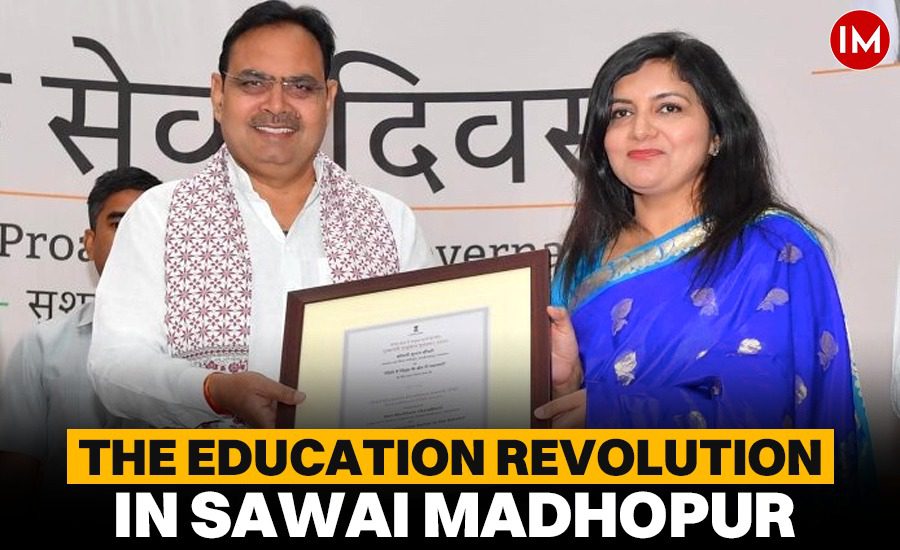
At the heart of this change was IAS officer Shubham Chaudhary, a 2014-batch officer of the Rajasthan cadre, who, during her tenure as District Collector, reimagined how education could be delivered and experienced. Her efforts did not go unnoticed. For her innovative work in the education sector, she was honoured with the Chief Minister’s Excellence Award, a recognition of both vision and execution.
Now serving as Director in the Horticulture Department of Rajasthan, Chaudhary’s work in Sawai Madhopur continues to stand as a compelling model of grassroots reform.
A PROBLEM THAT NEEDED MORE THAN A POLICY
When Chaudhary began visiting schools in the district, she noticed something that numbers could not capture. Children were present in classrooms, but many were hesitant to speak. Girls attended school, but often lacked awareness about their rights and safety. Infrastructure gaps persisted, and communities remained disconnected from the idea of contributing to education.
Read Also: Beyond the UPSC Dream: How Pratibha Rani Is Redefining Governance in Bihar
Instead of treating these as isolated problems, she approached them as interconnected challenges.
“Education is not just about textbooks,” she told Indian Masterminds. “It is about confidence, safety, and the environment in which a child grows. If one part is weak, the entire system suffers.”
This understanding led to the creation of three initiatives—Mission Samvad, Mission Nidar, and Bhavishya Ki Udaan 2.0—each addressing a different layer of the education ecosystem.
MISSION SAMVAD: BREAKING THE SILENCE IN CLASSROOMS
Mission Samvad began with a simple but powerful question: why are students afraid to speak?
Across government schools, it was observed that while students could read, many struggled to express themselves. This hesitation affected their learning outcomes and limited their confidence.
The initiative targeted over 41,000 students from Classes 6 to 8 across 632 schools. Libraries were strengthened, teachers were oriented, and systems were put in place. But the real change came from creating regular opportunities for students to speak.
Every fortnight, students were encouraged to read and then express their thoughts in front of their peers. Slowly, the fear of judgment began to fade.
“Confidence cannot be taught in a day,” Chaudhary said. “It grows when children are given repeated chances to speak and are not afraid of making mistakes.”
The results were striking. Within weeks, more students began participating. Data showed a steady rise in those performing at higher levels of expression, while the number of students struggling to communicate declined.
What changed was not just classroom interaction—it was self-belief.
MISSION NIDAR: FROM FEAR TO AWARENESS
While Mission Samvad focused on expression, Mission Nidar addressed another critical gap—safety and awareness among girls.
Many girls were unaware of legal protections and hesitant to approach authorities in times of need. The initiative aimed to change this by building trust and awareness.
Girls from senior classes were taken on visits to police stations, where they interacted directly with officers and learned about laws related to women’s safety. At the same time, self-defense training was provided to girls across schools.
The idea was to move beyond theory and create real-world exposure.
“We wanted girls to feel empowered, not dependent,” Chaudhary shared with Indian Masterminds. “When they understand the system and their rights, they are more confident in facing challenges.”
The scale of participation was remarkable. Almost all eligible girls in the district took part in either police station visits or self-defense training. More importantly, there was a visible shift in their confidence levels.
Girls began asking questions, engaging more actively, and showing greater awareness of their surroundings and rights.
BHAVISHYA KI UDAAN 2.0: WHEN THE COMMUNITY STEPPED IN
Even as efforts were made to improve learning and awareness, infrastructure remained a challenge. Many schools lacked basic facilities, and government resources alone were not enough to bridge the gap.
Chaudhary turned to the community.
Bhavishya Ki Udaan 2.0 was built on the belief that lasting change comes when people take ownership. The initiative encouraged villagers, alumni, and local stakeholders to contribute to school development.
Funds were mobilized through innovative means. In some villages, mustard crop residue was sold to raise money. In others, communities chose to redirect spending from traditional practices like funeral feasts towards school infrastructure.
School Development and Management Committees ensured that the funds were used transparently.
“When people invest in something, they protect it,” Chaudhary explained. “We wanted schools to become a shared responsibility.”
Over time, the impact became visible. Schools saw improvements in classrooms, sanitation facilities, digital tools, and playgrounds. The transformation was not just physical—it brought a sense of pride and ownership among community members.
A HOLISTIC MODEL OF CHANGE
What makes this initiative stand out is its integrated approach. Instead of focusing on one aspect, it addressed multiple dimensions of education simultaneously.
Mission Samvad worked on confidence and communication.
Mission Nidar focused on safety and empowerment.
Bhavishya Ki Udaan 2.0 strengthened infrastructure and community involvement.
Together, they created an ecosystem where students could learn, express, and grow in a safe and supportive environment.
This holistic model is what earned Chaudhary the Chief Minister’s Excellence Award. It recognized not just innovation, but the ability to bring together systems, people, and ideas to create meaningful change.
BEYOND AWARDS: A LASTING IMPACT
While the award is a significant recognition, the real success of the initiative lies in its long-term impact.
Students who once hesitated now speak with confidence.
Girls who were unsure now understand their rights.
Communities that remained distant are now active participants in education.
“Awards are encouraging, but the real reward is seeing change on the ground,” Chaudhary reflected. “When a child raises their hand without fear or a parent takes pride in improving a school, that is what truly matters.”
A STORY THAT CONTINUES
Today, even as Shubham Chaudhary has moved on to a new role, the foundation she built in Sawai Madhopur continues to shape the district’s future.
Her work is a reminder that meaningful reform does not always require large budgets or complex policies. Sometimes, it begins with observing closely, listening carefully, and acting with clarity.
Sawai Madhopur’s journey shows that when administration connects with people, change becomes not just possible, but sustainable.
And in that quiet transformation lies a powerful lesson for districts across the country.
Read Also: Meet Sangeeta Raghav: The First Female Magistrate from UP to Shine at National Yoga Championship