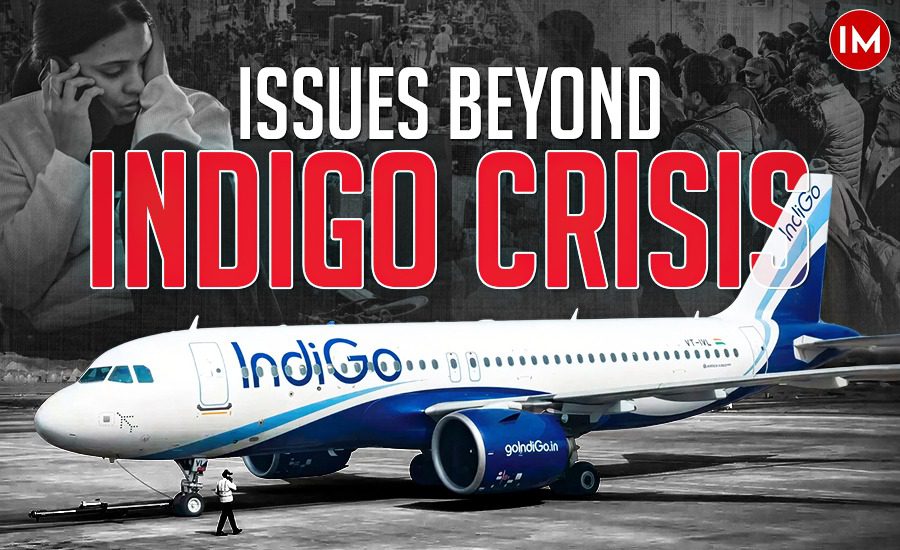
It was a scene straight out of a dystopian thriller: On December 5, 2025, Delhi’s Indira Gandhi International Airport, the world’s busiest by passenger volume, ground to a halt. Over 1,000 IndiGo flights were axed nationwide, stranding more than 100,000 travellers in a frenzy of missed connections, skyrocketing fares, and desperate pleas for refunds. Families separated, weddings postponed, patients delayed enroute to hospitals; the chaos rippled from the capital to Mumbai, Bengaluru, and beyond. IndiGo, India’s aviation behemoth with a 65% domestic market share, had imploded, cancelling half its schedule in a single day. On-time performance? A dismal 3.7%. All 235 departures from Delhi were badly affected.
It was a self-inflicted wound, born of hubris and haste. The trigger: Phase II of the Directorate General of Civil Aviation’s revised Flight Duty Time Limitations (FDTL) norms, enforced from November 1 after one and a half years of the warning notice was issued. Mandating 48 hours of uninterrupted weekly rest for pilots (up from 36), extending night duty windows from midnight to 0600 hours, and slashing night landings from six to two per week, the rules aimed to combat pilot fatigue, a silent killer implicated in 15-20% of global aviation incidents. But IndiGo, flush with dominance, bet on exemptions that never came. When reality hit, the airline’s lean operations buckled, exposing cracks in India’s booming $25 billion aviation sector.
STRATEGIC MISCALCULATION
The FDTL overhaul began with pilot unions petitioning the Delhi High Court in 2019-2020, decrying exhaustion from gruelling rosters. The court prodded the DGCA to align with global standards. Notified in January 2024, the phased rollout gave airlines ample time to hire and train. While other airlines like Indian Airlines, Akasa and Vistara complied, IndiGo, under CEO Pieter Elbers, prioritized expansion: adding international routes, acquiring 24 new aircraft, and boosting winter schedules by 10% without bolstering crew.
Aviation experts call it a strategic miscalculation. The Federation of Indian Pilots slammed the carrier’s “unorthodox lean manpower strategy”: a hiring freeze since mid-2024, frozen pay scales, non-poaching pacts with rivals, and zero buffer beyond the mandatory 4%. With 5,456 pilots for 418 aircraft, a ratio of 13:1, IndiGo operated on razor-thin margins. Compare that to Air India’s 19:1 (3,600 pilots for 189 planes) or Akasa Air’s cushy 26:1 (800 for 31). The new rules demanded 20-33% more crew to maintain schedules. IndiGo’s response remained zilch. It started with reassigning exhausted crews, and, when that failed it mass cancelled the flights.
By November, 1,232 flights – more than half of Indigo daily schedule of 2375 flights – were cancelled – 62% due to “crew constraints.” Come December and the crisis escalated: 755 in the first week, peaking at more than 1,000 on the 5th. Elbers’ belated video apology on December 6 admitted a “serious operational crisis,” blaming weather, ATC glitches, and “transitional challenges.” Unions called it corporate blackmail. Insiders claim Indigo deliberately harassed the passengers to arm-twist the government into submission. And it succeeded.
PILOTS’ PLEA FOR SANITY
At the crisis’s heart are India’s 12,000 commercial pilots, a workforce stretched thinner than ever amid 1,700 pending aircraft orders demanding 30,000 more by 2030. IndiGo pilots, averaging 36-38 years old with 3,099 first officers and 2,357 captains, have borne the brunt. Union demands are clear: enforce FDTL without exemptions, mandate rigorous Fatigue Risk Management Systems, and penalize violations.
An open letter from IndiGo pilots circulating on social media decries “selective dispensation” that endangers lives: “IndiGo pilots will now fly with reduced rest and increased fatigue, placing passengers at elevated risk.” They accuse the airline of arm-twisting the regulator via cancellations, a tactic honed over years of lobbying. For an Airline with almost Rs 15000 crore profit booked in last financial year, hiring 1000 or 1200 more pilots during past two years and train them as per their requirement wasn’t impossible. But, one needed a will to do that.
A SECTOR OUT OF BALANCE
India’s pilot crunch is structural. With 834 active aircraft today, the fleet could swell to 1,500 by 2029. Ratios vary wildly: SpiceJet’s 7:1 mirrors IndiGo’s peril, while Alliance Air’s regional 4:1 suits low-volume ops. Air India Express (19:1) and Akasa (26:1) complied seamlessly, hiring hundreds and pausing expansion, respectively.
IndiGo’s 13:1 worked pre-FDTL, enabling 5.7 daily sectors per aircraft on 908 km averages. But with zero buffer post-norms, it cratered. Rivals like Akasa (6.9 sectors/day) thrived on buffers; IndiGo’s “strategic mistake” left it exposed.
A DOMINO EFFECT ON SKIES AND GROUND
The human toll was visceral. At Bengaluru, 124 cancellations on December 6 left queues snaking terminals; a father begged for sanitary pads for his stranded daughter. Fares spiked 200-300% on Kolkata-Delhi (₹60,000 one-way), prompting the Ministry of Civil Aviation to cap economy fares at ₹18,000. IndiGo’s stock dipped 5% on December 5, erasing ₹4,000 crore in market cap.
Airports like Delhi (70% IndiGo slots) faced congestion; security and ground handlers logged overtime. Other airlines, Air India, Express, Akasa, added 500+ flights, boosting loads to 95% but straining crews. SpiceJet grabbed 100 routes, growing 19% year-on-year. The sector, eyeing 376 million passengers in FY25, saw on-time performance plummet 20 points, eroding trust in a market growing 15% annually.
WEAK GOVERNMENT RESPONSE
The Ministry and DGCA moved fast: a 24/7 control room, priority for vulnerable passengers (children, elderly), and refunds mandated by December 7, 8 PM. Elbers faced a show-cause notice on December 6, demanding response by midnight December 7; a four-member probe, reporting January 2026, examines lapses. Exemptions, reverting night windows to 0000-0500, suspending landing caps and rest-leave overlaps, apply only to IndiGo’s A320s till February 10, 2026.
Critics howl: pilot unions called it “endangering lives for convenience.” Opposition MPs labeled it a “failure on both DGCA and airline.” Minister Ram Mohan Naidu defended: “All airlines were alerted; IndiGo didn’t prepare.” Yet, the selective waiver smells of capitulation to monopoly muscle.
WHO ERRED, AND WHY?
Blame cascades, but IndiGo shoulders the lion’s share. Its “sweat-the-assets” model, pioneered since 2006, squeezed margins to 12% via overutilization, ignoring safety’s red lines. Its profits hit ₹14,641 crore on ₹80,803 crore revenue in last financial year, but FY26’s Q2 ₹2,582 crore loss amplified cost paranoia. Elbers’ silence till December 6 reeks of entitlement.
DGCA too erred as its lax audits pre-November enabled complacency; the hasty exemption undermines the High Court’s fatigue mandate. Government?
SOLUTIONS TO STABILIZE THE SKIES
The Directorate General of Civil Aviation (DGCA), India’s aviation regulator, granted IndiGo a temporary exemption from certain Flight Duty Time Limitations (FDTL) provisions—specifically for its A320 fleet on night duties, weekly rest substitutions, and operations encroaching on rest periods—valid until February 10, 2026. IndiGo must submit fortnightly crew utilization reports and a 30-day compliance roadmap by early January 2026 to ensure full adherence.
If IndiGo fails to comply after the deadline, as A SHORT-TERM RELIEF DGCA can invoke powers under the Aircraft Act, 1934 (Sections 10, 14) and Aircraft Rules, 1937 (Rule 42A), along with Civil Aviation Requirements (CARs) like Section 3 Series M Part IV (passenger rights) and Section 7 Series J Part III (FDTL). These actions escalate from administrative to punitive, prioritizing safety and passenger protection. Past precedents include DGCA’s ₹80 lakh fine on Air India in March 2024 for FDTL breaches and ₹10 lakh on IndiGo in 2023 for offloading a passenger.
LONG-TERM PREVENTIVE MEASURES
Enforce Fatigue Risk Management Systems rigorously with quarterly DGCA audits coupled with whistleblower protections; tie AOC renewals to compliance.
Boost pilot pipeline: triple training slots (from 1,500/year) via subsidies; partner with global academies. Aim: 2,500 annually.
Diversify the duopoly: reallocate 10-15% IndiGo slots to Akasa/SpiceJet; ease foreign carrier cabotage for crisis relief.
Penalize preemptively: fines scaled to market share; personal liability for CEOs.
Passenger Bill of Rights: mandatory compensation (₹10,000+ for <24-hour notice), cross-carrier rebookings, and AI-driven disruption alerts.
Union empowerment should shorten notice periods, legalize strikes with safety carve-outs.
There should be a permanent regulatory mechanism to control air fares. No company should be allowed to create an artificial crisis allowing the other companies to charge exorbitant fares – sometimes 5-6 times of the normal fare.
There should also be penalty levied on the airlines delaying or cancelling a flight for reasons under control – like crew unavailability. If a flight refuses to refund the fare to a passenger missing deadline for reporting at the boarding gate, similar, may be exemplary penalty shootout be imposed on the airlines. They can be asked to refund upto 5-6 times of the fare, to passengers if a flight is cancelled due to airlines’ own shortcomings.
Its time for the Civil Aviation Ministry and the regulator to turn a crisis into a course correction. The IndiGo disruption was not a one-off operational glitch; it was a stress test revealing how fast growth, regulatory tightening, and lean operational models can collide.
The hard but necessary response is a systemic strengthening of India’s pilot training pipeline, clearer regulatory transition norms, and a culture of roster resilience across airlines. If these lessons are learned and acted on, the industry can convert this painful episode into a watershed moment.