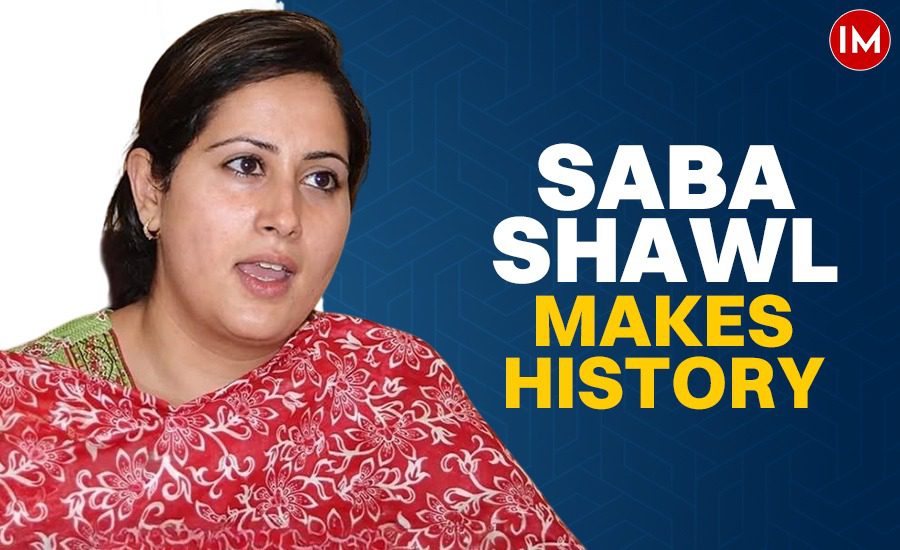
On March 2, 2026, a routine government order carried an uncommon shift. In Srinagar, a high-security prison with a long and layered past found new leadership—Saba Shawl, the first woman to head the Central Jail.
The significance of this appointment lies not just in the position but also in where it is placed. Prisons, particularly high-security ones, have traditionally remained male-dominated spaces—both in structure and leadership. Shawl’s entry into this role marks a departure from that pattern, placing a woman officer at the helm of one of the most sensitive institutions in Jammu and Kashmir.
AN INSTITUTION WITH HISTORY AND CHALLENGES
Central Jail Srinagar is more than a correctional facility. It is the oldest prison in the Union Territory, with origins tracing back to a time when it stood on the outskirts of the city near Hari Parbat. Today, Srinagar has grown around it, turning what was once a peripheral structure into a part of the city’s everyday geography.
Also Read – From Dentist’s Chair to Island Command: How Dr. S. B. Deepak Kumar Rose to Shape the Future of Lakshadweep
The jail currently houses over 500 inmates and operates within an aging infrastructure that demands constant upkeep. Discussions around relocating the facility have been ongoing, reflecting the need for modernisation in line with present-day requirements of security and inmate management.
Taking charge of such an institution requires more than administrative authority—it calls for an understanding of its history, its limitations, and its evolving role in a changing urban and institutional landscape.
A CAREER BUILT WITHIN THE SYSTEM
Saba Shawl is not new to the prison system she now leads. Her career has unfolded within its framework, offering her both ground-level exposure and administrative insight.
She began her journey in correctional services after clearing the Jammu and Kashmir Public Service Commission (JKPSC) examination in 2012, where she secured the position of Superintendent of Police (Prisons). Notably, she earned the lone open merit post in her category, setting the tone for her professional trajectory.
In the early years, Shawl served at Central Jail Kot Bhalwal in Jammu and later at Kupwara Jail. These postings provided her with firsthand experience in handling prison operations across different environments—ranging from high-security setups to smaller facilities.
Her subsequent role at police headquarters added another dimension to her work, strengthening her administrative capabilities. Before her current posting, she served as staff officer to the director general of prisons, Jammu and Kashmir, where she was involved in coordination and oversight at the departmental level.
BEYOND UNIFORM
What distinguishes Shawl’s profile is the intersection of policing and social work. She holds a master’s degree in social work, a field closely linked to rehabilitation, welfare, and institutional care.
Before joining government service, she worked as a senior community development consultant at the Government Polytechnic for Women in Bemina. She was also associated with the Indo Global Social Service Society, contributing to development-focused initiatives.
This background offers a perspective that aligns with the evolving role of prisons—not just as spaces of confinement but as institutions where reform and reintegration are part of the larger objective.
LEADING A HIGH-SECURITY SPACE
Heading a high-security jail comes with layered responsibilities. It involves maintaining strict security protocols while also addressing issues related to inmate welfare, staff coordination, and administrative efficiency.
Central Jail Srinagar, given its scale and sensitivity, requires careful balancing of these priorities. Shawl’s previous roles within the prisons department place her in a position where she understands both operational challenges and systemic expectations.
Her appointment also reflects a gradual shift in how leadership roles are being assigned. While women officers have been part of policing and administration for years, their presence in command positions within correctional institutions remains limited.
A STEP THAT SIGNALS CHANGE
Saba Shawl’s appointment does not stand in isolation. It is part of a broader movement where institutional roles are slowly expanding beyond traditional boundaries.
For young women considering careers in law enforcement and public service, such developments add visibility to pathways that were once less accessible. Within the system, it signals a growing recognition of capability over convention.
At the same time, the responsibility attached to the role remains substantial. The expectations are not symbolic—they are operational, immediate, and continuous.
Also Read- Ankur Garg IAS: From AIR-1 to Steering a Union Territory’s Governance Engine