On some nights in Himachal Pradesh, policing is not about chasing criminals or enforcing laws. It is about walking through flooded valleys with broken communication lines, calming stranded tourists who cannot contact their families, or helping a woman quietly escape an abusive home she no longer feels safe in.
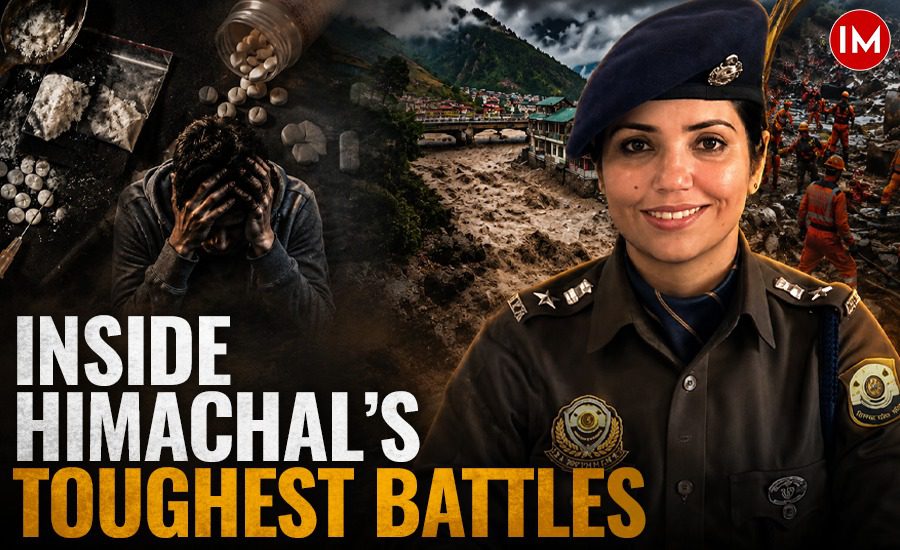
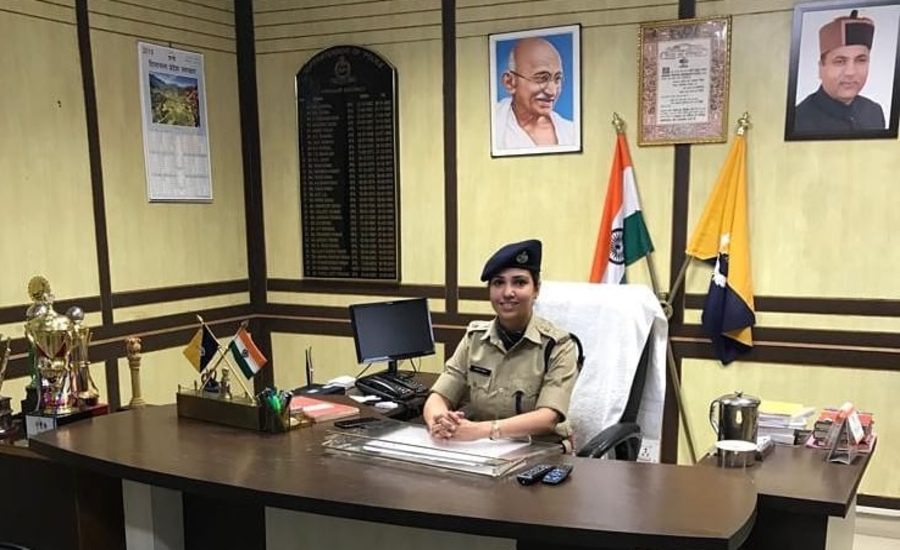
For Sakshi Verma Karthikeyan, an Indian Police Service (IPS) officer of the 2014 batch from the Himachal Pradesh cadre, these moments have defined policing far more deeply than statistics or headlines ever could. Currently posted as SP, Vigilance, Himachal Pradesh, she has spent years working across some of the state’s toughest challenges — narcotics trafficking, women’s safety, and disaster management.
Speaking to Indian Masterminds, she reflected not just on crime and administration, but on fear, resilience, social systems, and the emotional realities hidden behind official files.
THE EVOLVING DRUG CRISIS IN HIMACHAL
Himachal Pradesh’s picturesque valleys have long attracted tourists from around the world. But alongside tourism, certain regions developed a darker reputation linked to narcotics.
Districts like Kullu, especially areas such as Kasol, Parvati Valley, and Manikaran, became known for cannabis culture. According to Ms. Verma, the challenge initially revolved around locally grown cannabis. Over time, however, the problem transformed into something far more dangerous.
“Earlier we were dealing with cannabis. Now we are dealing with synthetic drugs.”
She explained that heroin and injectable narcotics have increasingly entered the ecosystem, often exchanged through interstate trafficking networks.
Also Read – “A Lot of Things Are Done Unsaid”: IPS Officer Sakshi Verma on Service, Marriage, and Sacrifice
The consequences, she noted, are far deadlier.
Unlike cannabis, synthetic drugs have triggered overdose deaths, especially among young users. For the police, this meant shifting from conventional seizures to more sophisticated intelligence-based policing.
BREAKING NETWORKS, NOT JUST MAKING ARRESTS
During her tenure in districts like Kullu and Mandi, anti-narcotics operations became increasingly data-driven and network-focused.
Instead of merely arresting carriers, police teams began investigating “forward and backward linkages” — tracing suppliers in states like Punjab and Delhi while identifying local distribution chains inside Himachal Pradesh.
Financial investigations also emerged as an important strategy. Whenever an accused was arrested, officers examined whether properties or assets had been acquired through drug money.
Yet, despite large seizures and arrests, Ms. Verma believes law enforcement alone cannot eliminate narcotics abuse.
“Police alone cannot solve this.”
For her, the crisis is fundamentally linked to demand, unemployment, social isolation, and lack of direction among youth.
“Sometimes they are not seeing any future only,” she observed during the conversation.
A COMMUNITY-LED FIGHT AGAINST ADDICTION
Recognising that narcotics cannot be fought solely through raids and FIRs, her teams launched community-oriented interventions.
In Mandi, awareness campaigns were conducted across schools and colleges, where students participated in anti-drug competitions and awareness drives at multiple levels. The objective was not only education, but peer influence.
The police also encouraged anonymous identification of drug hotspots. Residents often knew which isolated corners or abandoned spaces had become gathering points for substance abuse.
Those locations were then integrated into police patrolling routes.
Importantly, grassroots workers such as ASHA and Anganwadi staff were brought into the effort because they often had first-hand knowledge of families struggling with addiction.
For Ms. Verma, the larger goal was rehabilitation and reintegration rather than simply criminalisation.
WOMEN’S SAFETY BEYOND PUBLIC SPACES
One of the strongest themes in her reflections was the issue of violence against women — particularly domestic violence.
While public discourse often focuses on unsafe streets, she pointed toward a more uncomfortable reality.
“I felt women are not safe within the house,” she said.
A particularly brutal murder case in Mandi deeply shaped her understanding of the issue. She realised that many women continued enduring abuse not because they accepted it, but because they feared financial insecurity, social judgment, and uncertainty about raising children alone.
To address this, her team worked to connect distressed women with welfare schemes meant for single, divorced, or separated women and their children.
Many women, she discovered, were simply unaware such support systems existed.
The approach reflected her broader policing philosophy — that law enforcement must also function as a bridge between vulnerable citizens and state support systems.
THE GUDIYA HELPLINE AND RESPONSIVE POLICING
Ms. Verma also spoke about the Gudiya Helpline initiative that emerged after a horrific rape and murder case involving a minor girl in Shimla.
The initiative aimed to provide women a safer and more accessible channel to seek help during moments of distress.
Later, the nationwide emergency response number 112 strengthened emergency assistance further by integrating response teams on the ground.
For her, however, helplines matter only when backed by real action.
“What matters is not just starting a helpline, but adding resources for response,” she explained.
WHEN DISASTER STRUCK HIMACHAL
Few experiences affected her as profoundly as the catastrophic Himachal disaster of 2023 while she was serving in Kullu.
Relentless rainfall destroyed roads, communication systems, and bridges, isolating entire subdivisions including Manali and Banjar.
“Kullu became like an island,” she recalled.
Nearly 70,000 tourists, including foreign nationals, were stranded across the district as panic spread among families unable to contact loved ones.
Police teams travelled on foot through uncertain terrain while authorities struggled to restore connectivity and deliver food supplies.
The challenge was not merely logistical. It was emotional.
Families across India and abroad desperately sought confirmation that relatives were alive and safe even when communication systems themselves had collapsed.
The trauma deepened further after another major disaster struck Himachal Pradesh in 2025 while she was serving in Mandi.
Entire areas like Thunag and Janjheli suffered devastating destruction. One memory still remains with her — arriving at a site where a two-storied house had completely disappeared after a hillside collapsed during heavy rainfall.
The family inside had died while cooking dinner.
Those experiences fundamentally altered her understanding of development and environmental sustainability.
“We have to grow, but we have to grow in a way that is safe for society as well,” she said.
LIFE BEYOND EXAMINATIONS AND DESIGNATIONS
Across the conversation, what emerged most strongly was not merely the story of an IPS officer, but of someone trying to understand society beyond official categories.
For Sakshi Verma Karthikeyan, addiction is not only crime. Women’s safety is not only policing. Disasters are not only infrastructure failures. And success is not defined only by examinations or ranks.
Her reflections carried an unusual balance of administrative realism and emotional clarity.
Perhaps that is why her simplest line feels like the most powerful conclusion of all:
“Life is much bigger than this.”
Also Read- Championing Women’s Safety through Dial 112 in Telangana