Bijapur (Chhattisgarh): A small roadside grocery shop in Kondapalli village of Bijapur district became the setting for a powerful story of transformation, resilience, and hope on Tuesday when Chhattisgarh Chief Minister Vishnu Deo Sai made an unexpected stop during his tour under the ongoing Sushasan Tihar outreach programme.
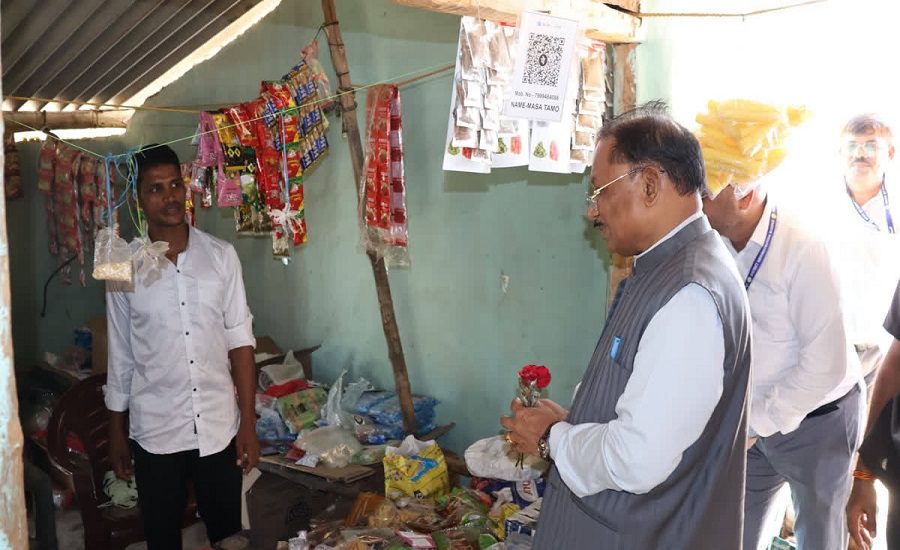
What began as a routine halt quickly turned into an emotional moment as the Chief Minister met Masa Tamo and Jaymoti, a former Maoist couple who once lived amid conflict and uncertainty but have now successfully rebuilt their lives through rehabilitation and self-employment.
The interaction not only highlighted the couple’s remarkable journey back into mainstream society but also reflected the broader transformation taking place across Bastar, where efforts to promote peace, development, and rehabilitation are steadily changing lives.
CM Stops at Grocery Shop, Discovers Story of Hope
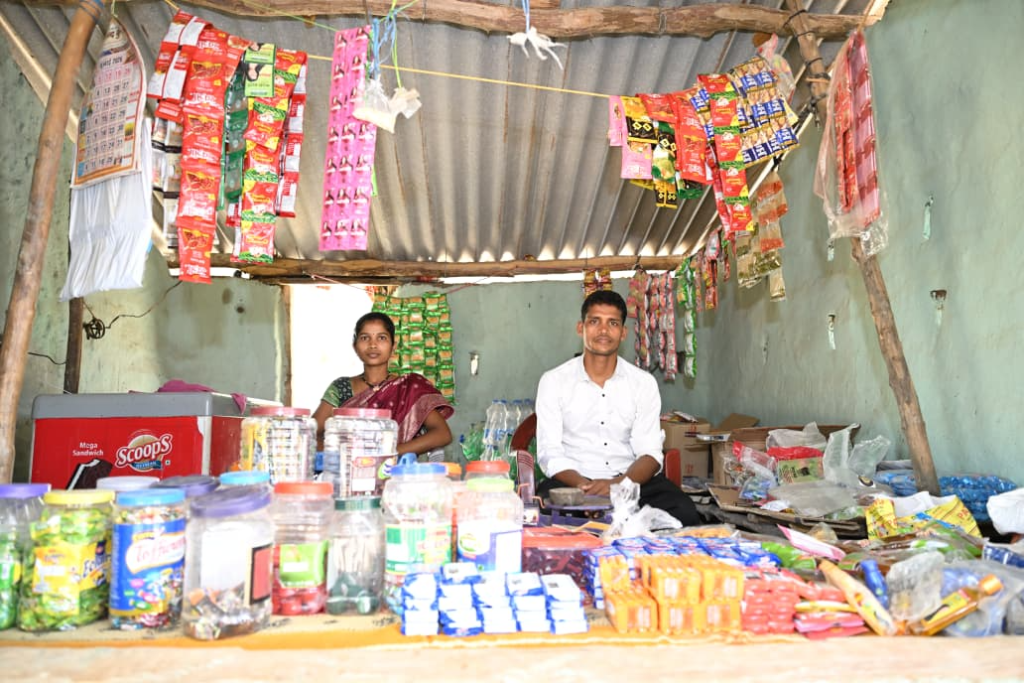
During his visit to Kondapalli village, Chief Minister Vishnu Deo Sai stopped at a modest grocery shop operated by Masa Tamo and Jaymoti. As the Chief Minister entered the shop and purchased a bottle of water, he engaged in a warm conversation with the couple, listening to their story of struggle, surrender, and renewal.
The visit carried a powerful symbolic message — that rehabilitation and self-reliance can offer a meaningful alternative to lives once trapped in violence.
For the couple, the unexpected interaction with the Chief Minister became a memorable moment, reinforcing their belief that choosing the path of peace had been the right decision.
A Life Shaped by Hardship and Conflict
Masa Tamo’s journey into the Maoist movement began during a period of extreme hardship. Following the death of his father, he was unable to continue his education. Facing severe economic challenges and limited opportunities, he eventually joined a Maoist organisation in 2007.
Jaymoti’s story was similarly marked by tragedy. Orphaned at a young age, she too became involved in the Maoist movement after growing up amid difficult circumstances.
The two eventually met while working within the organisation and married in 2021.
However, as years passed, both began questioning the future that awaited them in a life defined by conflict.
According to the couple, they gradually realised that remaining within the Maoist organisation would only perpetuate violence and uncertainty, not only for themselves but also for future generations.
“We started questioning ourselves about what the future holds for us. And if we continue as Naxals, it would not end with us, it would follow through generations. It was time to bid adieu,” the couple recalled during their interaction.
Decision to Surrender and Return to Mainstream Society
Determined to change the course of their lives, Masa Tamo and Jaymoti surrendered in October 2025 and returned to mainstream society.
Their decision marked a turning point.
After surrendering, the couple was admitted to the Bijapur Rehabilitation Centre, where they received extensive support aimed at helping former Maoists reintegrate into society.
The rehabilitation programme provided them with literacy assistance, skill-development training, and access to various government welfare schemes designed to support surrendered cadres.
The couple also received administrative assistance to secure important documents necessary for rebuilding their lives.
These included:
- Aadhaar cards
- Ration cards
- Ayushman Bharat health cards
- MGNREGA job cards
- Caste certificates
- Bank accounts
These documents enabled them to access government services, welfare benefits, and livelihood opportunities that had previously remained out of reach.
Government Support Helps Launch Grocery Business
A major boost came when Jaymoti received financial assistance through the Women and Child Development Department’s Saksham Yojana.
Under the scheme, she was provided a loan of Rs 1 lakh, which helped the couple establish a grocery store in Kondapalli village.
Today, the shop stands as a symbol of their successful rehabilitation and determination to build a dignified future.
What may appear to be a small business represents something far more significant for the couple — independence, stability, and hope.
The store has become their primary source of income and a visible reminder that life after surrender can offer meaningful opportunities.
‘We Have a New Identity’: Couple Shares Their Experience
Speaking with Chief Minister Sai, Masa Tamo and Jaymoti expressed gratitude for the support they received after returning to mainstream life.
The couple said they are now living with self-respect and optimism about the future.
“We never imagined life could change so dramatically, but rehabilitation support and administrative help gave us a new identity,” they told the Chief Minister.
Their story demonstrates how rehabilitation initiatives can help individuals move away from violence and establish productive lives within society.
CM Sai Highlights Changing Face of Bastar
Chief Minister Vishnu Deo Sai described the couple’s journey as a reflection of the larger transformation underway in Bastar.
According to the Chief Minister, development, trust, and rehabilitation are gradually replacing fear and conflict across the region.
“This is not merely the story of two people, but a reflection of a changing Bastar. When people receive opportunity, trust and support, they can leave violence behind and rebuild a life of dignity,” Sai said.
He emphasized that government initiatives focused on rehabilitation, livelihood generation, and development are helping create sustainable pathways for individuals seeking to return to mainstream society.
Symbol of Bastar’s Transformation
The emotional interaction between the Chief Minister and the former Maoist couple has emerged as one of the most touching moments of the ongoing Sushasan Tihar programme.
Beyond the personal story of Masa Tamo and Jaymoti, the encounter highlighted the changing realities of Bastar — a region that has long grappled with insurgency but is increasingly witnessing stories of rehabilitation, development, and hope.
For many residents, the couple’s grocery shop is more than a business. It symbolizes a second chance, the power of rehabilitation, and the possibility of a future built on peace rather than conflict.
As Bastar continues its journey toward development and integration, stories like that of Masa Tamo and Jaymoti are becoming powerful examples of how opportunity, support, and trust can transform lives.
Read also: Chhattisgarh CM Vishnu Deo Sai Launches ₹737 Crore Development Projects in Durg Under Sushasan Tihar