In the heart of rural India, where opportunities are often limited by circumstance and dreams frequently struggle against the weight of poverty, there emerge rare individuals who refuse to allow their beginnings to define their future.
Their journeys become larger than personal success. They become stories of hope. Stories that tell young people in villages and small towns that hardship is not destiny, that determination can outgrow deprivation, and that service can become a powerful instrument of change.
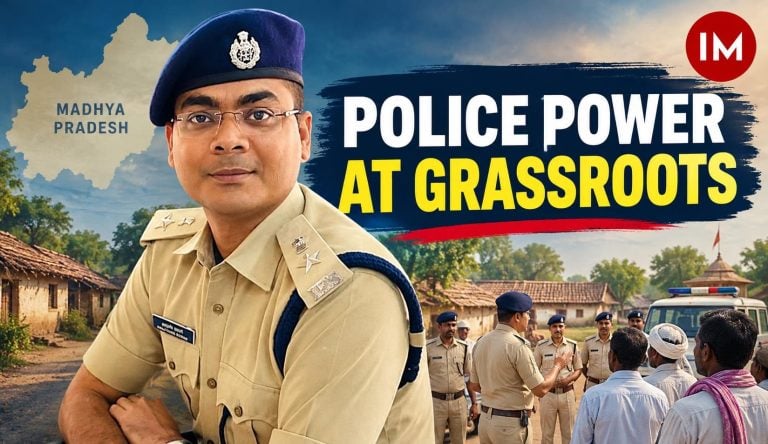
One such story belongs to a 2013-batch IPS officer of the Chhattisgarh cadre, Bhojram Patel.
Born into a small farming family in Tarapur village of Chhattisgarh’s Raigarh district, Mr Patel grew up amid financial hardship, uncertainty, and scarcity. His family owned barely two bighas of agricultural land. There was no history of government service in the family, no access to expensive coaching institutes, and no roadmap leading toward prestigious careers.
Yet through relentless hard work, self-study, discipline, and an unwavering commitment to public service, he rose from the classrooms of a government school to become an officer of the Indian Police Service.
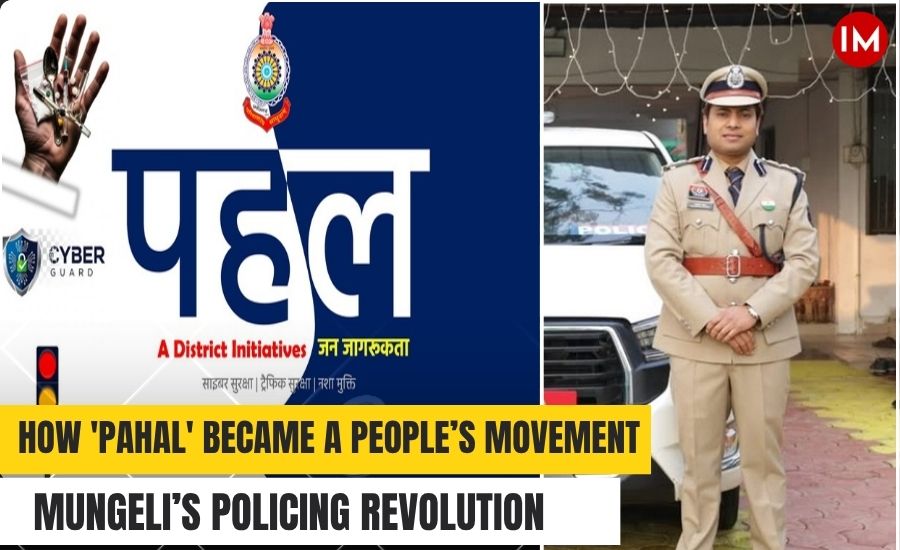
Today, as Superintendent of Police, Mungeli, he is not merely enforcing the law. He is reshaping the relationship between the police and the public through innovative initiatives focused on awareness, prevention, trust-building, and community participation.
His latest initiative, “Pahal,” reflects a policing philosophy rooted in one simple belief: the strongest police system is one that works alongside the people rather than apart from them.
His journey is proof that success is not determined by where one starts, but by how far one is willing to travel.
A POLICING STYLE THAT PUTS PEOPLE FIRST
Throughout his career, IPS Patel has consistently demonstrated that policing extends beyond crime control and law enforcement.
Wherever he has served, his initiatives have reflected a deeper understanding of society’s needs and the importance of connecting institutions with citizens.
While serving as Superintendent of Police in Korba, Patel introduced a weekly off system for police personnel. Korba became the first district in Chhattisgarh to implement such a measure.
In a profession where long hours, stress, and personal sacrifices are considered normal, the move was groundbreaking. It acknowledged an often-overlooked truth: a police force can serve society effectively only when its own personnel are treated with dignity and care.
In Mahasamund, he launched “Khaki Ke Rang, School Ke Sang,” a cyber-awareness campaign aimed at school students. Within just two months, the initiative reached over 20,000 children and earned a place in the Golden Book of World Records.
During the Covid-19 pandemic in Gariaband, he initiated “Siyan Mitan,” through which elderly citizens received food, medicines, and support during one of the most difficult periods in recent history.
At a time when fear and isolation had become part of everyday life, the police stepped forward not only as protectors but also as caregivers.
His work consistently reflects a belief that policing is not merely about authority. It is equally about patience, empathy, listening, and trust.
ROOTED IN THE SOIL OF CHHATTISGARH
Despite reaching one of the country’s most prestigious services, Bhojram Patel has remained deeply connected to his roots.
He has actively promoted the Chhattisgarhi language and culture, even releasing a Chhattisgarhi song. During his tenure in Korba, he introduced the practice of singing the state song “Arpa Pairi Ke Dhar” daily in police offices and police stations.
For Patel, cultural identity is not symbolism.
It is a reminder that effective governance and policing require an understanding of local language, traditions, concerns, and aspirations.
A police officer who understands the people is often better equipped to serve them.
“PAHAL”: TURNING POLICING INTO A PEOPLE’S MOVEMENT
Today, that philosophy has taken shape in Mungeli through “Pahal,” a district-wide awareness initiative focused on three major challenges facing society:
- Cyber Security
- Traffic Safety
- Drug Abuse Prevention and De-addiction
The objective is straightforward yet ambitious: creating informed, aware, and responsible citizens.
Cyber fraud has entered homes through smartphones and digital transactions. Traffic violations continue to claim lives on roads. Drug addiction is emerging as a serious social challenge, particularly among young people.
Rather than addressing these issues separately, “Pahal” combines them into one integrated public-awareness movement.
Speaking with Indian Masterminds, IPS Patel explained the idea behind the initiative.
“This is the Pahal Community Policing Program, which rests on three pillars—cyber security, traffic awareness, and educating people on why they should stay away from drugs. We wanted to create an environment where young people become aware of these dangers and take responsibility for protecting themselves and their communities.”
What makes “Pahal” unique is that Patel never wanted it to remain merely a police campaign.
“I did not want people to see it only as community policing. I wanted it to become a public movement. And that is what gradually happened,” he said.
TAKING AWARENESS TO THE PEOPLE
Unlike traditional awareness programmes confined to conference halls and government buildings, “Pahal” has been designed to travel where people actually live.
The campaign reaches villages, gram panchayats, municipalities, urban wards, schools, colleges, government offices, private institutions, block headquarters, and digital platforms through webinars and social media outreach.
The logic behind this approach is simple.
Cyber fraud can happen inside a village home.
A road accident can occur on a rural road.
Drug addiction can begin among a small peer group.
Therefore, awareness must reach citizens before problems arise.
“Pahal” is built around prevention rather than reaction.
THE FIVE-STEP EXECUTION MODEL
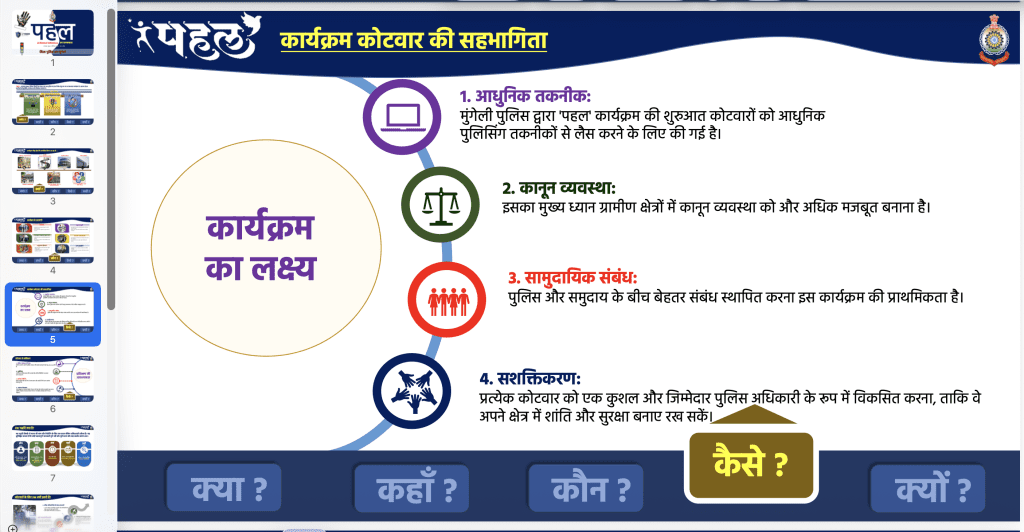
To ensure broad participation, Patel structured the initiative around five major stakeholder groups.
The first group consisted of Kotwars or village watchmen. The second involved schools and colleges. The third included elected public representatives, ranging from Sarpanches to senior political leaders.
The fourth group comprised women associated with Self-Help Groups and livelihood missions, including those connected to programmes such as Lakhpati Didi.
The fifth group focused on Divyangjan (persons with disabilities).
“Every section of society had to be included. Awareness cannot succeed if it remains limited to one institution or one department,” Mr Patel told Indian Masterminds.
KOTWARS: THE FIRST LINE OF COMMUNITY SAFETY
One of the most innovative aspects of “Pahal” is the training and empowerment of Kotwars.
In rural Chhattisgarh, Kotwars possess unmatched grassroots knowledge. They know local families, understand social dynamics, and are often the first to become aware of emerging problems.
Recognising their importance, Mungeli Police transformed them into active public-safety partners.
The initiative focuses on improving their understanding of law and order, strengthening communication with police stations, enhancing reporting standards, and building stronger police-community relations.
This is where “Pahal” moves beyond awareness and enters the realm of capacity building.
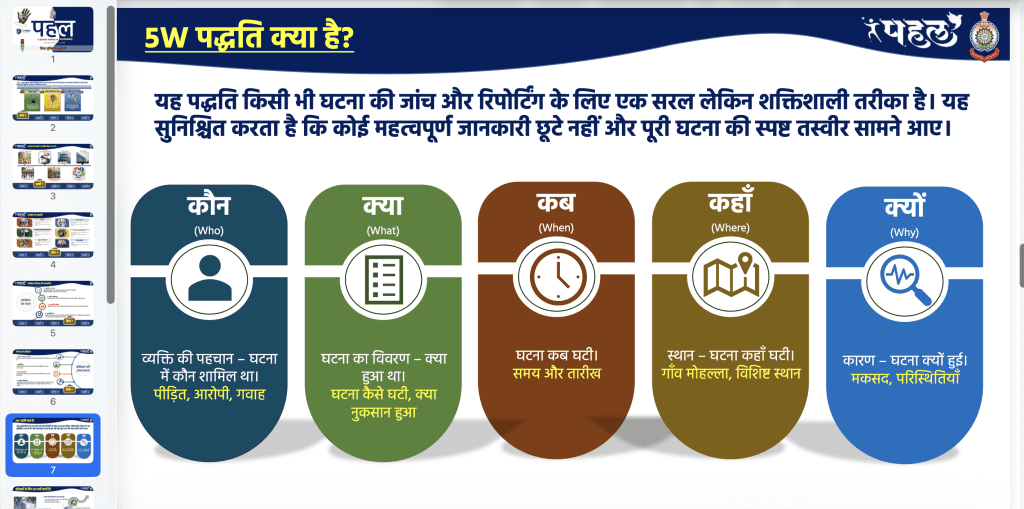
THE POWER OF THE 5W METHOD
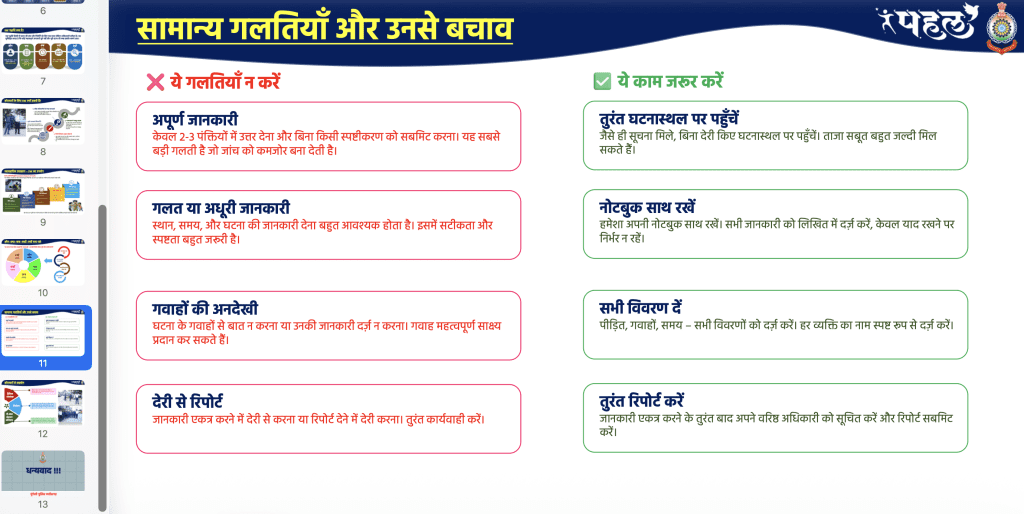
A key component of Kotwar training is the 5W framework:
- Who
- What
- When
- Where
- Why
Kotwars are trained to gather complete and accurate information regarding any incident.
Who was involved? What happened? When did it occur? Where did it occur? Why might it have happened?
This structured reporting system helps eliminate gaps in information and strengthens police response.
In theft cases, for example, Kotwars now gather details about victims, suspects, witnesses, stolen property, timing, location, and possible motives.
The difference between a vague report and a complete report can determine the effectiveness of an entire investigation.
CYBER SECURITY: BUILDING AWARENESS BEFORE FRAUD OCCURS
Cybercrime forms one of the strongest pillars of “Pahal.”
The initiative focuses heavily on educating citizens about hacking, online banking fraud, phishing attacks, OTP scams, identity theft, and financial fraud.
A major emphasis has been placed on awareness regarding the national cyber helpline number 1930.
“People often panic when money is lost through cyber fraud. We wanted citizens to know exactly what steps to take instead of feeling helpless,” Patel said.
The police also trained bank officials to strengthen coordination between financial institutions and law enforcement.
“People were not aware of how frozen funds could be recovered. We worked with banks and police teams so citizens understood the process and knew where to go for help,” he explained.
EVERY MOBILE USER IS A CYBER PRAHARI
One of the most innovative elements of the cyber campaign was Patel’s rejection of conventional volunteer models.
Instead of creating a formal cyber volunteer force, he adopted a far broader vision. “Anyone who owns a mobile phone is a Cyber Prahari,” he said.
Mungeli district has 148 police beats. Accordingly, 148 WhatsApp groups were created, each led by a beat in-charge.
These groups circulate simple, relatable cyber-awareness messages daily.
Patel believes awareness works best when communicated through everyday examples.
“You can give your heart to someone, but never give your OTP,” he said with a smile while describing one of the campaign’s most popular messages.
The approach helped citizens see themselves as active participants in cybercrime prevention rather than passive victims.
Read Also: How Punjab Became India’s Best-Performing State in School Education
PROTECTING FARMERS FROM CYBER FRAUD
Perhaps the most remarkable success story under “Pahal” emerged during the paddy procurement season.
As the Rice Bowl of India, Chhattisgarh witnesses massive financial transactions when paddy payments are made to farmers.
Recognising that cybercriminals often target such periods, the district police stationed trained personnel at procurement centres to guide farmers on banking safety and digital transactions.
The result was extraordinary.
“Not a single farmer lost even a single rupee to cyber fraud,” Mr Patel said. For him, this remains one of the initiative’s proudest achievements.
TRAFFIC SAFETY THROUGH THE ‘TRIPLE E’ MODEL
The second pillar of “Pahal” focuses on traffic safety through the internationally recognised Triple E framework:
Engineering. Education. Enforcement.
Engineering
The district identified accident-prone locations and worked with departments such as PWD, Forest, Public Health Engineering, and district administration.
Road defects were corrected, visibility improved, dangerous curves addressed, and safety infrastructure such as speed breakers, reflectors, radium markers, and streetlights installed.
Education
Multiple departments including Women and Child Development, Health, Education, and Social Welfare were brought together.
Awareness programmes addressed small but critical safety habits.
Women riders were advised to secure saree pallus while riding scooters.
Parents were educated about safely carrying children on two-wheelers.
Senior citizens were encouraged to undergo regular eye check-ups and ensure proper vision while driving.
“The government handles the larger policy issues. We focused on the small details that often save lives,” Mr Patel explained.
Emergency Response
Dedicated medical protocols were developed for accident victims.
Specific transportation routes were mapped.
Doctors and hospital staff were assigned emergency responsibilities.
As a result, treatment response times improved significantly.
The impact was measurable.
“The death toll dropped by nearly 20 percent,” Patel said.
Enforcement
Strict enforcement targeted drunk driving, drug-impaired driving, overloaded vehicles, and unsafe parking practices by heavy vehicles.
The focus remained on preventing high-risk behaviour while simultaneously educating citizens.
TAKING ON THE DRUG MENACE
The third pillar of “Pahal” focuses on de-addiction and anti-drug awareness.
Patel understood that awareness alone would not be sufficient.
The supply chain itself had to be disrupted.
Mungeli’s proximity to Bilaspur had led to concerns about the spread of brown sugar and other narcotics.
Police teams launched targeted operations, dismantling supply networks and tracing connections stretching as far as Prayagraj and Varanasi.
Key traffickers were arrested.
But enforcement was only one part of the strategy.
Families were also brought into the effort.
Parents of affected youth were counselled and educated about early warning signs such as isolation, loss of appetite, and behavioural changes.
“We told parents not to simply scold their children. Counseling and support are equally important,” Mr Patel said.
One year after the initiative began, the district has witnessed a noticeable reduction in drug-related problems and associated fatalities.
WHEN COMMUNITY POLICING BECAME A PUBLIC MOVEMENT
Perhaps the most significant achievement of “Pahal” lies beyond statistics. It lies in relationships.
As police personnel entered villages, schools, public gatherings, festivals, and community programmes, barriers began to disappear.
People became more comfortable approaching the police.
Trust increased.
FIR registrations rose because citizens felt confident reporting problems.
At the same time, many disputes were addressed earlier through communication and awareness.
“People started seeing this programme as their own. Once people take ownership, a programme sustains itself,” Patel observed.
That sense of ownership gradually transformed “Pahal” from a government initiative into a community movement.
BUILDING SOCIAL HARMONY THROUGH A SHARED CAUSE
One unexpected outcome of the programme was the strengthening of social harmony.
Patel frequently explained that cybercrime does not discriminate between rich and poor, caste or religion.
Fraud can affect anyone.
That common vulnerability helped communities come together.
“Cybercrime transcends religion, caste, and social status. When people understood that, they began helping each other,” he said.
The result was a stronger sense of fraternity and collective responsibility.

A JOURNEY THAT HAS COME FULL CIRCLE
There is a striking connection between Bhojram Patel’s personal story and the philosophy behind “Pahal.”
He understands rural India because he comes from it. He understands scarcity because he has lived through it.
He understands the consequences of information gaps because he has witnessed them firsthand.
Whether supporting police personnel in Korba, educating schoolchildren in Mahasamund, helping elderly citizens during Covid in Gariaband, or building awareness networks in Mungeli, the central theme remains unchanged.
Community. Trust. Participation. Prevention.
For IPS Patel, policing is not simply about controlling crime after it occurs.
It is about creating conditions where crime, accidents, fraud, and social harm become less likely to occur in the first place.
AN INSPIRATION FOR YOUNG INDIA
For young aspirants from ordinary backgrounds, Bhojram Patel’s life carries a powerful message.
He had no privilege. No expensive coaching. No family legacy in government service. No shortcuts.
What he possessed was determination, discipline, and purpose.
From a two-bigha farm in Tarapur to the Indian Police Service, his journey proves that circumstances may shape the struggle, but they need not determine the destination.
Today, through “Pahal,” that journey has come full circle.
The boy who once grew up in a small village is now helping strengthen villages.
The child who understood hardship is now building systems that protect others from it.
And in doing so, IPS Bhojram Patel is demonstrating that the true measure of success is not how far one rises—but how deeply one remains connected to the people and places that shaped the journey.
Read Also: Read Also: How a Nagaland Village Created the World’s First Community-Conserved Area for Asiatic Golden Cat Conservation