
The lush forests of Odisha had long been a sanctuary for elephants. These majestic creatures had roamed freely for generations, their massive feet thundering against the earth, their trumpeting calls resonating through the dense foliage. But in recent years, something had shifted. Once at ease in their natural habitat, the elephants were now venturing into nearby villages, raiding crops and causing chaos.
The reason for this change was no secret. The elephant population in Odisha had grown beyond what the forests could sustainably support. According to research by the Indian Institute of Science (IISc) in Bangalore, the region’s forests could comfortably accommodate about 1,700 elephants. Yet, the population had swelled to approximately 2,100—an excess of 400 elephants. This imbalance was straining both, the forests and the human communities, that lived on their fringes.
To gain a deeper understanding of the crisis, Indian Masterminds spoke with 1989-batch Indian Forest Service officer, Susanta Nanda, who now serves as the Principal Chief Conservator of Forests (PCCF), Wildlife for Odisha. He explained the situation in stark terms: “The forest’s resources -food, water, and shelter-are stretched thin. With more elephants than the land can support, many are forced to leave their natural homes in search of food and water, bringing them into direct conflict with human settlements.”

THE REPORT, REASONS & CARRYING CAPACITY
The Odisha Elephant Census 2024 report, released by the Forest and Environment Department in June, paints a clear picture of the growing elephant population in the state. According to the census, the total elephant population in Odisha has reached 2,098—an increase of 122 elephants from the previous count of 1,976 in 2017.
A key factor contributing to this surge is the expansion of paddy cultivation, particularly with the advent of irrigation. The increase in irrigated paddy fields has created new feeding grounds for elephants, drawing them into the state from neighboring Jharkhand and Chhattisgarh. This shift has led to an uptick in the elephant population in Odisha, though it remains difficult to fully assess how much of the landscape is being used by these migratory elephants. To gain a clearer picture, the Odisha government is conducting a Winter Census of elephants, with the results set to be released on November 27th.
For years, the elephant population in Odisha has hovered between 1,600 and 1,800, aligning closely with the state’s carrying capacity of around 1,700 elephants. Carrying capacity refers to the maximum number of individuals of a species that a given area can sustainably support. However, the increase in elephant numbers—over 400 more than the region’s sustainable limit — has led to heightened conflict between elephants and local communities.
Mr. Nanda explained, “Since 2017, the elephant population in Odisha has fluctuated between 1,800 and 2,000. But now, with elephants migrating from Jharkhand and Chhattisgarh, the numbers have risen further. The Winter Census will provide more clarity on the current situation, and we expect the final report to shed light on how the elephants are utilizing Odisha’s landscape.”
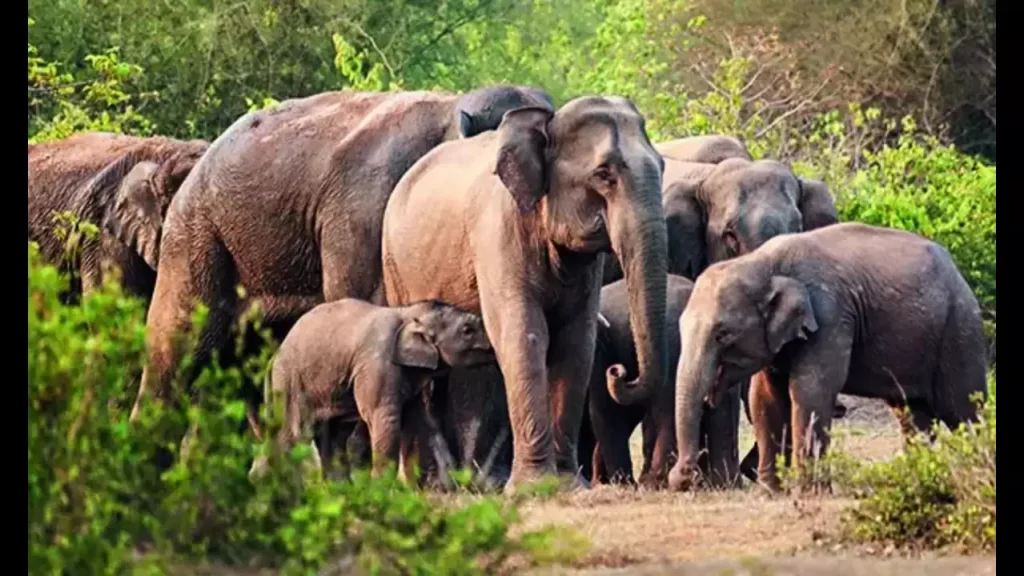
MANAGING EXTRA ELEPHANTS
Managing the growing elephant population is no small task. The escalating man-animal conflict in Odisha is a pressing concern. Mr. Susanta Nanda, the Principal Chief Conservator of Forests (PCCF), explained, “There is a severe shortage of food, shelter, water, and other essential resources for around 400 elephants in the forests. As a result, they are increasingly moving into human settlements to meet these needs, which in turn is driving the rise in human-elephant conflict.”
Villages situated on the fringes of the forest now find themselves under constant threat. Elephants, desperate for sustenance, raid paddy fields, trampling crops and leaving destruction in their wake. In response, farmers, frustrated and fearful, often resort to setting traps or firing into the night in an attempt to scare off the elephants. Unfortunately, these defensive measures only lead to more casualties on both sides, with elephants and humans alike suffering as a result.
While there have been efforts to manage the situation, the issue of the forest’s carrying capacity remains a significant concern. The influx of elephants from neighboring states like Jharkhand and Chhattisgarh has only exacerbated the strain on Odisha’s already stretched resources. With more elephants moving into the region, the challenge of balancing conservation with the safety and livelihood of local communities has become even more complex.
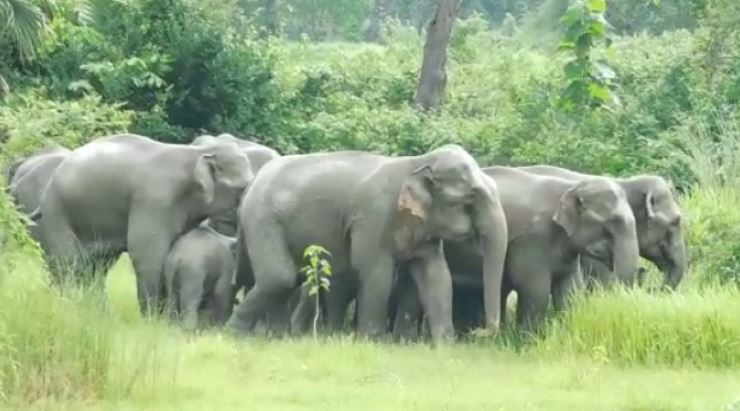
SOLUTION
The solution, as Mr. Nanda explained, lies in controlling the elephant population to mitigate the conflict. “Until we understand how these elephants are utilizing the landscape, it’s difficult to predict the future course of the conflict,” he said.
For now, the forest department’s strategy is clear: the conflict cannot be eliminated, only managed. This involves closely monitoring elephant movements, providing villagers with real-time updates, and enhancing awareness about how to coexist with these magnificent creatures. The department has implemented several initiatives, including a People Awareness Program, an Early Warning System at the village level, and the use of artificial intelligence to track elephant movement. This technology sends alerts to villagers, notifying them of the elephants’ presence and helping them take preventive measures.
The real challenge now is not how to stop elephants from wandering into human settlements, but how to ensure a sustainable future for them in the forests of Odisha. Addressing this issue requires more than just science and technology—it demands a deep understanding of the land, the elephants, and the communities living alongside them.
The balance between humans and elephants in Odisha remains fragile, but with careful planning and cooperation, there is hope for a future where both can share the land in harmony. The elephants’ path continues—one of survival, adaptation, and perhaps, a new understanding between man and nature.
REDUCTION IN DEATH COUNTS
Mr. Nanda also highlighted some progress in reducing human casualties. “We are in the process of implementing changes, and that’s why the number of human casualties has been steadily declining. In previous years, we had more deaths—last year, for instance, there were around 185 fatalities. But this year, we’ve had only about 80. Our goal is to bring that number down to 50 by next year. When human casualties decrease, the social carrying capacity for elephants increases, and public acceptance of the elephants will grow as well.”
Social carrying capacity (SCC), Nanda explained, refers to the level of human use or presence in a given area—such as the number of elephants or people—beyond which the quality of experience for all parties, including the elephants, begins to deteriorate. By managing the human-elephant relationship more effectively, the SCC can be increased, allowing both the communities and the elephants to thrive together.
WINTER CENSUS
The report of the Winter Census for elephant estimation undertaken by the Forest Department will be released by November 27. The estimation was held between November 14 and 16 to assess the jumbo population using the Odisha landscape. Considered to be the first winter count of the pachyderms, the three-day estimation was done in 2,030 census units across 48 divisions using more than 1,300 machans and multiple drones including thermal drones. The major highlight of the census was profiling of each herd and lone tuskers, Nanda said.