For decades, education in many schools revolved around marks, memorization, and silence. Students were taught to answer, but rarely encouraged to question. Confidence, curiosity, and communication often remained outside the classroom walls.
But in Haryana’s Kaithal district, that story is changing under the leadership of IAS officer Aparajita.
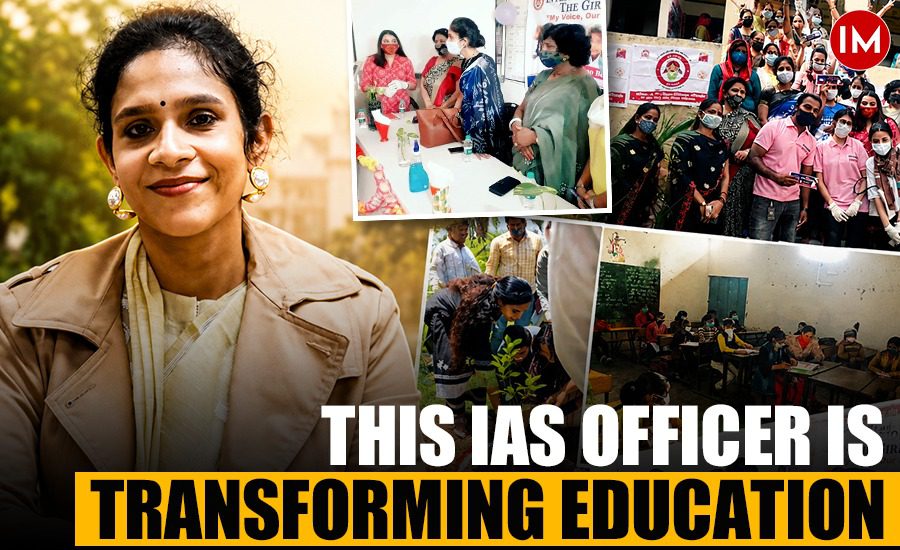
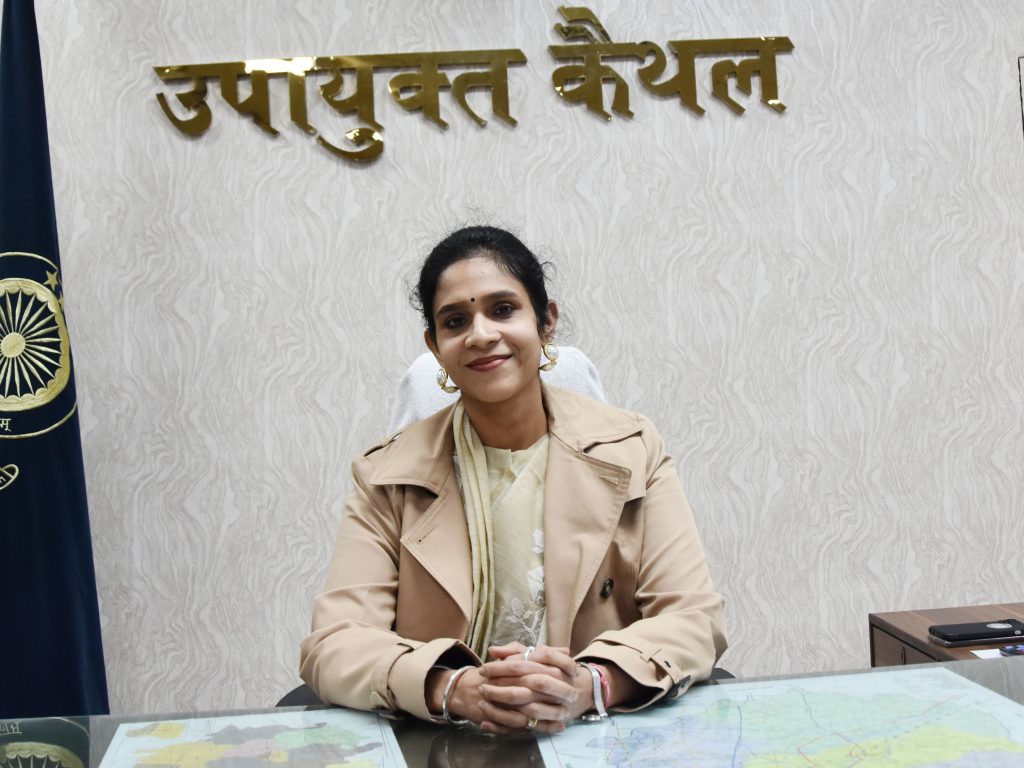
A 2018-batch IAS officer of the Haryana cadre and currently serving as the Deputy Commissioner (Collector) of Kaithal, Aparajita is redefining what education truly means for children in rural India. Through her transformative initiative “Beyond Books” and its innovative extension “Joyful Saturdays,” she is creating classrooms where students are encouraged to think freely, participate openly, and learn fearlessly.
Her vision goes beyond textbooks and examinations. She believes education must build confidence before it builds careers.
“I want to instil curiosity in children and build their confidence. Even if they ask a question and are wrong, they should be able to ask again and attempt the answer,” she says.
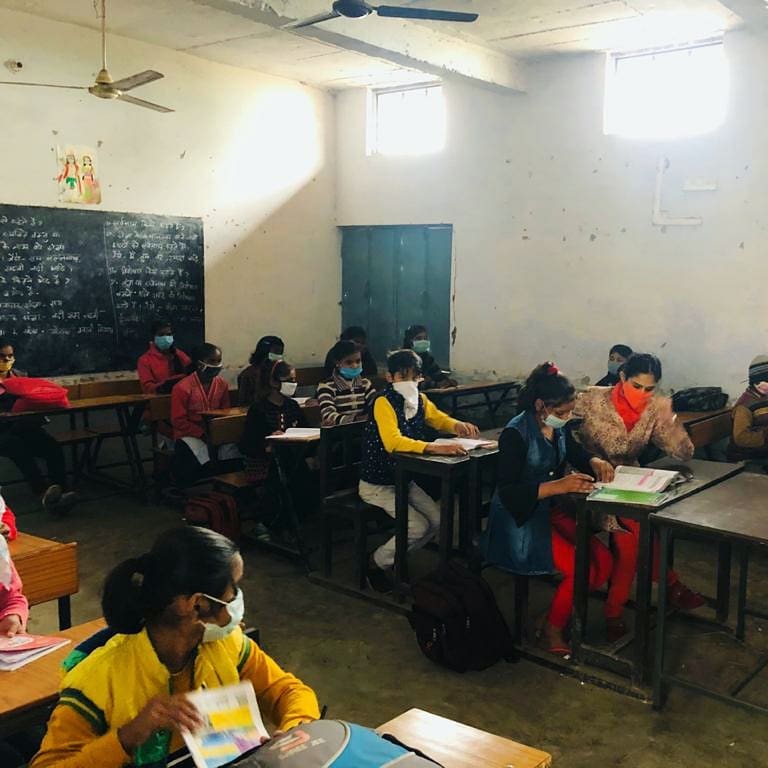
Today, her efforts are helping thousands of students overcome hesitation and self-doubt. In classrooms across Kaithal, children who once sat quietly at the back are now participating in discussions, performing experiments, speaking on stage, and discovering the courage to express themselves.
For Aparajita, true development is not only about roads, systems, and infrastructure – it is about nurturing confident young minds who never shy away from asking questions or seeking knowledge.
And that belief is now becoming a movement.
Aparajita: The Officer Behind the Change
Ms Aparajita, born on 26 Feb 1992, currently serving as the Deputy Commissioner of Kaithal district and Additional Secretary to the Government of Haryana in the Information Technology, Electronics & Communication Department, she has steadily built a reputation as an officer deeply committed to grassroots transformation.
Read Also: From 3 Interview Failures to AIR 9 in UPSC IFS 2025: The Inspiring Journey of Ravi Laxmipriya
Originally from Varanasi, UP, Ms Aparajita grew up in an academically enriched environment. Her father served as an IRS officer, while her mother was a university professor of Ancient History. One of the biggest influences in her life was her maternal grandfather, whose ideals and inspiration motivated her to pursue civil services.
Academically bright from an early age, she pursued a Bachelor of Technology degree in Chemical Engineering from Birla Institute of Technology (BIT), Mesra, Ranchi.
Before entering the civil services, she worked as a Deputy Manager (Environment) at ACC Limited. It was during this period that she witnessed social and infrastructural disparities firsthand. Being the only female employee at that plant setup gave her a unique understanding of workplace realities and governance gaps.
That experience became a turning point in her life.
She realized that meaningful societal transformation required administrative authority, public participation, and systemic reform. This realization eventually pushed her towards the UPSC Civil Services Examination.
The UPSC Journey: Learning from Failure and Rising Stronger
She cleared the UPSC Civil Services Examination in 2017 with an impressive All India Rank (AIR) 40 in her third attempt.
Her journey, however, was not without setbacks.
In one of her earlier attempts, she struggled with time management during the Mains examination after attempting questions from the back of the answer sheet. The mistake left several important answers incomplete, affecting her performance.
Instead of allowing failure to discourage her, she treated it as a lesson in resilience and self-awareness.
That experience taught her the importance of psychological strength, discipline, and learning from mistakes – values she now tries to instill in students across Kaithal.
For her preparation, she chose History as her optional subject and relied on selective, focused study material instead of overwhelming herself with excessive resources. She often summarized important concepts directly in textbook margins and maintained concise notes to avoid information overload.
Her journey reflects a philosophy she now passes on to young students:
Mistakes are not failures if one has the courage to try again.
From Urban Administration to Rural Transformation
Over the years, Aparajita has handled several challenging administrative assignments across Haryana.
Her field career began as the SDM of Ballabhgarh, where she handled law and order, dispute resolution, and revenue administration.
She later served in multiple urban governance roles within the Municipal Corporation of Faridabad as Assistant Commissioner and Additional Commissioner. During this period, she managed civic utilities, taxation systems, and grievance redressal mechanisms.
She also worked as:
- Additional Deputy Commissioner (ADC) in Ambala and Panchkula
- Municipal Corporation Commissioner in Panchkula
- Additional Administrator for HSVP in Faridabad
- Mission Director of Haryana’s Swachh Bharat Mission
As Mission Director, she supervised sanitation and waste-management initiatives across the state, strengthening public health infrastructure and cleanliness systems.
But it was after assuming charge as Deputy Commissioner of Kaithal in late 2025 that her people-centric governance approach began drawing widespread attention.
“Beyond Books”: Reimagining Education in Rural Schools
Upon taking charge in Kaithal, IAS Aparajita noticed a deep-rooted issue within the education system.
Many students possessed academic potential but lacked confidence. Fear of making mistakes often prevented them from speaking, participating, or asking questions.
This observation led to the launch of one of her most impactful educational initiatives – “Beyond Books.”
The initiative was designed to transform traditional classroom culture and move beyond rote memorization. Its core objective was simple yet powerful:
To create fearless learners.
Under this initiative, government schools in Kaithal began focusing not only on academic instruction but also on:
- Confidence building
- Public speaking
- Critical thinking
- Interactive learning
- Curiosity-driven education
- Participation-based classroom engagement
Teachers were encouraged to make learning more conversational and inclusive, especially for rural students who often struggle with self-expression.
The initiative sought to ensure that students would never feel embarrassed about asking questions or giving wrong answers.
Because for Aparajita, curiosity is the first sign of learning.
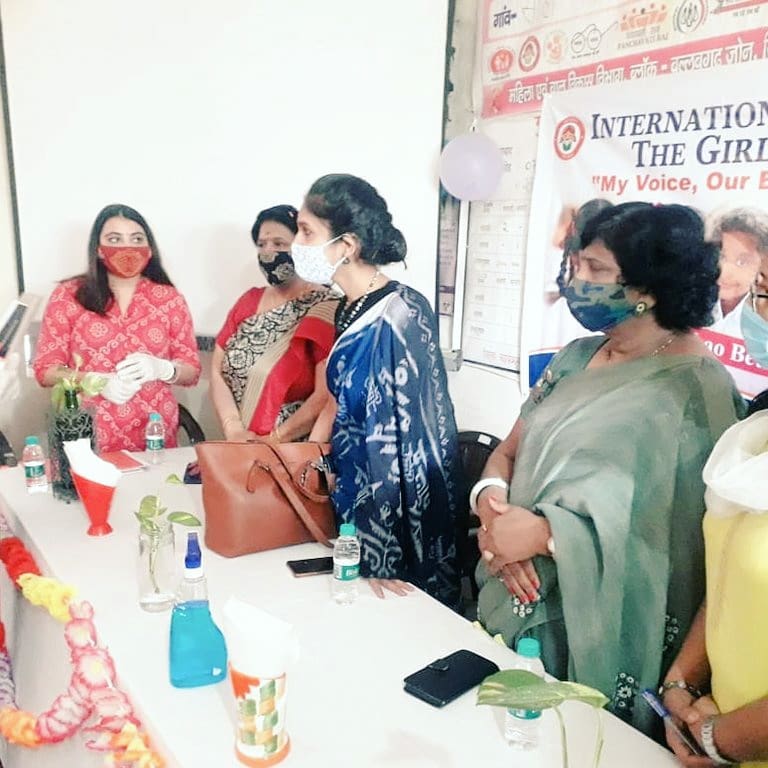
“Joyful Saturdays”: Turning Schools into Spaces of Curiosity
One of the most innovative parts of the “Beyond Books” initiative is “Joyful Saturdays.”
Under this program, Saturdays in government schools are transformed into engaging, activity-driven learning experiences.
Instead of routine lectures and textbook-heavy sessions, students participate in:
- Group discussions
- Public speaking activities
- Interactive science experiments
- Team-building exercises
- Creative learning modules
- Open-mic confidence sessions
- Hands-on participation activities
The idea is to make schools emotionally welcoming and intellectually exciting.
Children are encouraged to express opinions, ask unconventional questions, and participate without fear of judgment.
For many students, these sessions became their first opportunity to speak publicly or actively engage inside a classroom.
The impact has been visible.
Teachers have observed increased participation, stronger classroom confidence, and improved communication among students who were once hesitant to even introduce themselves.
Through “Joyful Saturdays,” education in Kaithal is gradually becoming less about pressure and more about possibility.
Building Infrastructure Alongside Confidence
While educational reform remains one of her key priorities, Aparajita’s administration has simultaneously focused on strengthening district infrastructure.
Her governance model combines human development with systemic efficiency.
She has actively worked on:
- Upgrading school infrastructure
- Improving public service delivery
- Strengthening health systems
- Monitoring supply chains
- Enhancing administrative transparency
Her efforts in rural medical infrastructure included inspections of health centers and digitization of medicine tracking systems to ensure proper distribution and reduce wastage.
She also initiated stricter monitoring mechanisms for fuel pumps and domestic gas agencies to curb black marketing, artificial shortages, and panic buying.
Through direct public communication and accountability-based governance, her administration aimed to ensure that essential services reached citizens fairly and efficiently.
A Leadership Style Rooted in Empathy
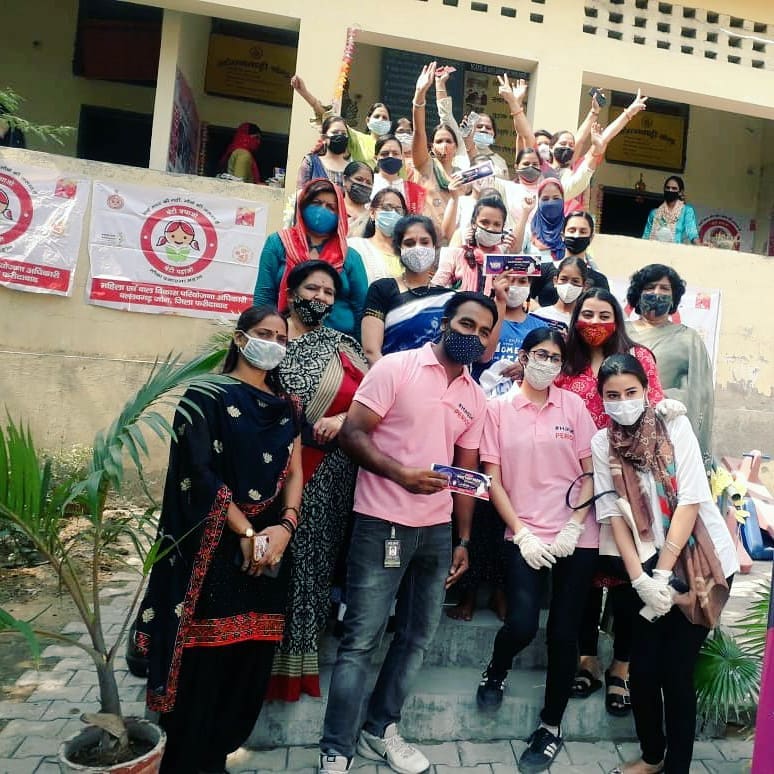
What distinguishes Aparajita’s administrative style is her focus on emotional empowerment alongside governance.
She understands that development is not only about physical infrastructure — it is also about dignity, confidence, and opportunity.
Her initiatives reveal a deeper understanding of rural realities:
that many children do not fail because they lack intelligence, but because they lack encouragement.
By changing the atmosphere inside classrooms, she is trying to change the future outside them.
Her work reflects the belief that governance becomes meaningful when it directly touches people’s everyday lives.
Creating a Generation That Is Not Afraid
In many ways, Aparajita’s work in Kaithal represents a larger shift in Indian governance – one where administration is no longer limited to files and offices, but reaches classrooms, communities, and young minds.
Her initiatives may appear simple on the surface: interactive classes, experiments, discussions, joyful activities.
But their impact is profound.
Because when a child gains confidence to ask a question, speak publicly, or believe in themselves, an entire future changes.
Through “Beyond Books” and “Joyful Saturdays,” IAS Aparajita is not merely reforming schools.
She is helping shape a generation that is curious, fearless, expressive, and ready to lead.
And perhaps that is the most powerful form of nation-building of all.
Read Also: How 15 Million Trees Revived Karnataka’s Driest District Into a Model of Ecological Revival